
Flowers
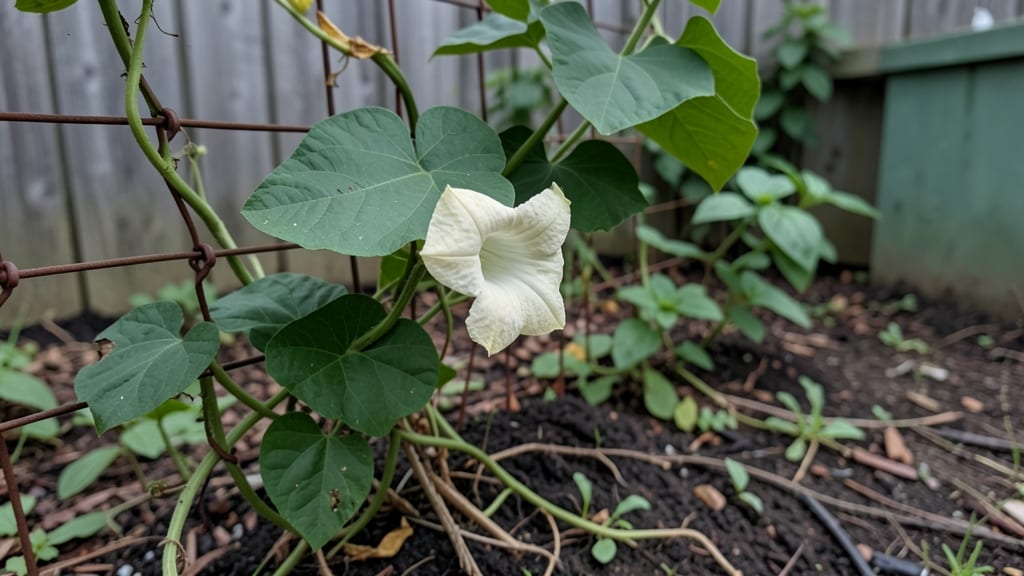
What does a moon flower look like—imagine this ghostly lantern unfurling after sunset, its snow-white, trumpet-shaped blooms stretching 5-7 inches wide, the largest of all night-blooming flowers. 🌙 Unlike morning glories, their petals stay pristine all night, only wilting by midday. while their velvety, heart-shaped leaves climb aggressively on trellises or fences, covering ground faster than kudzu.
The key giveaway? Those thick, waxy petals that reflect moonlight like a beacon, and the sweet, jasmine-like scent that fills the air when you brush past them after dark.
If you've ever mistook them for morning glories, here's the trick: moon flowers bloom only at night, while morning glories open in the morning. Their vines also grow thicker and more woody as they mature, with showy, seedpods that resemble tiny lanterns—another dead giveaway.
These traits aren't just for show; they help you time pruning (after blooms fade) and choose the right trellis height (6+ feet for full climbs). Plus, their nocturnal habit attracts moths and bats, turning your garden into a nighttime oasis.
What you'll notice first is how dramatically they transform your space after dark—imagine a whitewater cascade of blooms against a moonlit sky. The scent alone makes them worth growing, but their disease-resistant nature means less fuss than roses.
They thrive in full sun to partial shade, making them perfect for fences, arbors, or even container training (with support). Once established, they self-seed like crazy, creating a self-sustaining display year after year.
Here's the secret most gardeners miss: their roots are surprisingly deep, so mulch heavily to retain moisture, and avoid over-pruning—they bloom best when given room to sprawl.
Pair them with night-scented jasmine or evening primrose for a sensory double feature, or let them climb near patios where the moonlight effect is most noticeable. With just a little guidance, you'll have a garden that comes alive after the sun goes down.
📚 In This Guide
- What you need
- Instructions
- Tips and common mistakes
- Wrapping up and next steps
What you need
- ● Seeds: 5–10 high-quality Ipomoea alba seeds (non-GMO, organic preferred). Look for reputable seed suppliers or local nurseries.
- ● Potting soil: 1–2 bags of well-draining, organic potting mix (e.g., Miracle-Gro or FoxFarm Ocean Forest blend). Avoid heavy clay soil.
- ● Containers: Seedlings: 3–5 small pots (4–6 inches wide) with drainage holes.
- ● Mature plants: 1 large container (12+ inches wide) or direct garden bed with full sun exposure (6+ hours/day).
- ● Fertilizer: Balanced organic fertilizer (e.g., Fish emulsion or 10-10-10 NPK) for transplanting and monthly feeding.
- ● Support structure: Trellis, fence, or stakes (6+ feet tall) for vining varieties.
- ● Basic gardening tools: Trowel or small shovel
- ● Pruning shears (sterilized)
- ● Watering can or hose with gentle spray nozzle
- ○ Optional (but helpful): Grow lights (for indoor seedlings)
- ● Soil pH test kit (ideal range: 6.0–7.0)
- ● Mulch (to retain moisture)
- ● Glove (to protect hands from sap)
- ● Prerequisites: Patience! Moon flowers take 60–90 days to bloom from seed.
- ● Warm climate (USDA zones 10–12) or a greenhouse for cooler regions.
- ● 🌡️ Temperature: Seeds germinate best in 70–80°F (21–27°C) soil. Use a seedling heat mat if needed.
- ● 💧 Watering: Keep soil consistently moist but not soggy. Drought stress = fewer blooms!
- ● 🌙 Lighting: While they thrive in full sun, young seedlings prefer indirect light to avoid legginess.
How to identify moon flower vines in your garden
Recognizing these nocturnal beauties is easier than you think—just watch for these telltale traits.
🌿 Step 1: Spot the Heart-Shaped Leaves
Moon flowers (Ipomoea alba) start with glossy, heart-shaped leaves that grow on fast-climbing vines. These leaves are 3-5 inches long, with smooth edges and a deep green hue that shines when touched. Unlike morning glories, the leaves stay attached all season—they don’t yellow and drop as quickly. I always check for this first because the vines can sprawl 10-15 feet in one season if left unchecked.
The key detail? Look at the leaf veins—they form a subtle V-shape near the base, creating a faint "thumbprint" pattern. This helps distinguish them from similar vines like sweet potato plants, which have more jagged edges and hairy stems. Run your fingers along the stem too; moon flower stems are slightly fuzzy but never prickly.
☀️ Step 2: Observe the Buds Before They Open
Moon flower buds form in clusters along the vine, wrapped in silver-green papery sheaths that look like crinkled tissue paper. These buds are 1-2 inches long and point upward before blooming. Unlike morning glory buds, which are more rounded, moon flower buds have a slightly elongated, trumpet-like shape even when closed. I’ve found that checking for these buds in late afternoon is the best time—just before they open for their nightly show.
Here’s the thing—these buds only open in low light conditions, typically after sunset. If you see buds that refuse to open during the day, it’s a sign they’re either not getting enough evening shade or the temperature’s too warm (above 85°F). The buds also have a faint, sweet fragrance when gently squeezed—morning glories lack this scent entirely.
🌙 Step 3: Confirm the Night-Blooming Habit
The defining feature? Moon flowers bloom only at night, opening fully by dusk and closing by early morning. To confirm, watch the vine for 3-4 consecutive evenings—you’ll notice the buds unfurl into large, pure white trumpets (up to 3-5 inches wide) as daylight fades. The petals are delicate but sturdy, with a subtle lavender tint at the throat that deepens slightly in moonlight. Unlike morning glories, which close by noon, moon flowers stay open until sunrise.
Pro tip: Use a red flashlight (which plants can’t detect) to observe them after dark. You’ll see the flowers release a mild, jasmine-like scent that attracts moths and other nocturnal pollinators. If you spot flowers that stay open all day, it’s likely a hybrid or a different variety—true moon flowers are strict night bloomers.
✂️ Step 4: Check the Seed Pods for Final Verification
After blooming, moon flowers develop spindle-shaped seed pods that turn brown and split open when mature. These pods are 2-3 inches long and contain flat, black seeds that resemble tiny beans. Unlike morning glory seeds, which are round and white, moon flower seeds are elongated and glossy. I always save a few seeds from my vines—they’re easy to collect once the pods dry out and crack open.
One more clue: The vines themselves are twining, meaning they coil clockwise around supports like trellises or fences. If you see a vine that’s sprawling randomly (not climbing), it’s probably not a moon flower. The twining habit is a dead giveaway—these vines are built to climb, not sprawl.
Tips & tricks for identifying moon flower vines
A few key observations can help you distinguish moon flowers from their daytime cousins with confidence.
Leaf Texture Clues: In Step 1, when examining those 3-5 inch heart-shaped leaves, focus on the stem's fuzzy texture—it's a dead giveaway. Unlike sweet potato vines, moon flower stems never develop prickles. I've seen gardeners overlook this detail and mistake fuzzy stems for morning glory vines, which have completely smooth stems. Run your fingers along the stem while checking the leaves for that subtle thumbprint vein pattern.
Bud Observation Timing: The late afternoon check in Step 2 is crucial—this is when you'll notice the silver-green papery sheaths that distinguish moon flower buds. I've made the mistake of checking too early in the morning when buds might still be closed, leading to confusion. Remember that these buds only open in low light conditions, so if you see buds that refuse to open during daylight hours, it's a strong indication of improper growing conditions or temperature issues above 85°F.
Nighttime Observation Strategy: For Step 3's night-blooming confirmation, I recommend using a red flashlight after dark to observe the flowers without disturbing their nocturnal pollinators. The subtle lavender tint at the throat of the white trumpets is often missed in daylight but becomes more apparent under artificial light. This is also when you'll notice the jasmine-like scent most strongly—morning glories lack this characteristic fragrance entirely.
Seed Pod Collection: When checking those spindle-shaped seed pods in Step 4, wait until they're completely brown and beginning to split open. The flat, black seeds are much easier to collect at this stage. I've found that using a small paper bag to gently shake the pods helps collect more seeds without damaging them. These elongated seeds are a key distinguishing feature from morning glory seeds, which are round and white.
Pro Tips for What Does A Moon Flower Look Like
- A few key observations can help you distinguish moon flowers from their daytime cousins with confidence.
- Leaf Texture Clues: In Step 1, when examining those 3-5 inch heart-shaped leaves, focus on the stem's fuzzy texture—it's a dead giveaway.
- Bud Observation Timing: The late afternoon check in Step 2 is crucial—this is when you'll notice the silver-green papery sheaths that distinguish moon flower buds.
Frequently asked questions
about moon flowers—because even night-blooming beauty has its mysteries! Here are answers to the most common queries to help you spot, grow, and admire these enchanting blooms.Why does the moon flower only open at night?
The moon flower (Ipomoea alba) is a nyctinastic plant, meaning it follows a 24-hour rhythm. Its blooms open in response to darkness and warmth, typically around dusk, to attract night-pollinating moths and bats. By dawn, they wilt to conserve energy—nature’s built-in timer! Pro tip: If your flowers stay closed, check for bright artificial lights nearby.
How can I tell a moon flower apart from other white flowers?
Moon flowers have distinctive funnel-shaped blooms (3–5 inches wide) with 5 wavy petals and a slightly sweet fragrance at night. Unlike morning glories (their close cousin), moon flowers have heart-shaped leaves and long, slender vines that twine clockwise. Bonus: Their seed pods are spiky and woody—unlike smooth morning glory seeds.
When is the best time to plant moon flowers for nighttime blooms?
Plant seeds or transplants in late spring or early summer (after the last frost) in USDA zones 10–12 for year-round blooms. In cooler climates, treat them as annuals and plant in May–June. They thrive in full sun to partial shade and need 6+ hours of daylight to set blooms for nighttime. Need help? Start seeds indoors 4–6 weeks before the last frost!
What should I do if my moon flowers aren’t opening at night?
Try these fixes:
- Light check: Keep artificial lights away from plants 24 hours before blooming.
- Temperature: Ensure nights are warm (60°F+)—cool temps delay opening.
- Watering: Overwatering can stress roots; water deeply early in the day to let soil dry slightly by night.
- Fertilizer: Use a low-phosphorus feed (like 5-10-10) to avoid leafy growth over blooms.
Can I grow moon flowers in containers or hanging baskets?
Moon flowers are perfect for containers—just use a 5+ gallon pot with drainage holes and a lightweight potting mix. Train vines to climb a trellis or let them spill over edges. For baskets, opt for self-watering designs to prevent drying out. Pro tip: Deadhead spent blooms to encourage more flowers, but leave some seed pods for pollinators!
Wrapping up and next steps
The moon flower is a magical sight—its delicate, snow-white petals and soft fragrance make it a true nighttime treasure. 🌙 With its large, daisy-like blooms and vibrant yellow center, it’s easy to spot once you know what to look for.
Whether you’re admiring it in a garden or dreaming of growing your own, this enchanting flower is a reminder of nature’s quiet beauty.
Ready to bring some moonlit magic into your life? Start by planting moon flower seeds in your garden or pot—just follow the care tips you’ve learned, and you’ll soon have your own nocturnal blooms to admire! 🌱✨