Flowers
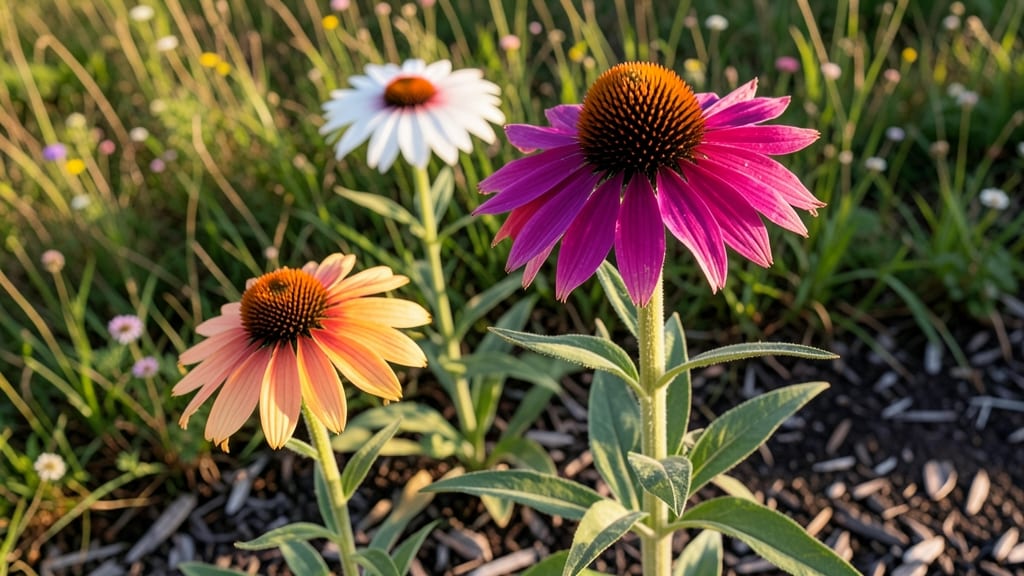
The vibrant cone flower colors—from deep purples to snowy whites—don’t just brighten your garden; they transform it into a buzzing pollinator paradise. 🌿 I’ve learned these striking blooms aren’t just pretty—they’re the backbone of a thriving ecosystem, drawing bees, butterflies, and hummingbirds. butterflies, and hummingbirds with their vibrant colors and nectar-rich petals.
Purple varieties like 'Magnus' and 'Little Sparky' create dramatic focal points, while crisp whites like 'White Swan' add elegance and contrast beautifully against deep greens. Mixing them in borders or containers layers texture and movement, ensuring your garden stays lively from midsummer through fall.
You’ll end up with a garden that feels alive—where every bloom serves a purpose, from attracting pollinators to extending seasonal interest. The right color pairings can even tie your landscape together, making transitions between spaces feel natural and intentional.
Whether you’re designing a pollinator-friendly meadow or a structured perennial border, cone flowers deliver both beauty and function. Let’s explore how to make the most of their stunning palette while keeping your garden buzzing with life.
📚 In This Guide
- What you need
- Instructions
- Tips and common mistakes
- Wrapping up and next steps
What you need
- ● Cone flower seeds or nursery plants: Choose varieties like Echinacea purpurea (purple), Echinacea pallida (pale pink/white), or Echinacea atrorubens (dark red/purple).
- ● Quantity: 5–10 plants (or seeds) per 100 sq. ft. for full coverage.
- ● Well-draining soil: Mix in compost or aged manure (1 part compost to 3 parts native soil) for nutrient-rich beds.
- ● Garden trowel or transplanting spade (for digging holes 6–12 inches deep).
- ● Garden gloves (to protect hands from thorns and soil).
- ● Watering can or hose with a gentle spray nozzle (cone flowers prefer deep but infrequent watering).
- ○ Mulch (optional but recommended): 2–3 inches of organic mulch (straw or shredded bark) to retain moisture and suppress weeds.
- ● Slow-release fertilizer (10-10-10 or organic options like fish emulsion) to boost blooms.
- ● Plant markers (to label varieties if testing multiple cone flower colors).
- ● Pollinator-friendly companions: Pair with lavender, black-eyed Susans, or salvia to create a buzzing ecosystem! 🐝
- ● Pruning shears (for deadheading spent blooms in late summer/fall).
How to select and arrange cone flowers for maximum pollinator appeal
Here's how I design vibrant purple and white cone flower displays that keep bees buzzing all season.
🌿 Step 1: Choose the Right Color Varieties for Your Space
Cone flowers come in stunning purple and white hues, each attracting different pollinators. For bold impact, I recommend starting with 'Magnus' (deep purple) and 'White Swan' (pure white) as your core plants. These varieties thrive in full sun and develop the signature cone-shaped blooms that pollinators adore.
Look for plants labeled as 'proven winners'—these have been bred specifically for pollinator attraction. The deeper purple varieties like 'Violetta' draw hummingbirds, while the white varieties like 'White Profusion' attract butterflies. I always check the plant tags for height at maturity to plan my arrangement—most cone flowers reach 3-5 feet tall, so place taller varieties at the back.
☀️ Step 2: Position for Optimal Sunlight and Pollinator Visibility
Cone flowers need 6-8 hours of direct sunlight daily to produce their signature blooms. In my garden, I place them in the south-facing border where they get morning sun and afternoon light. The flowers' upright stems make them highly visible to pollinators, so avoid planting them in shady spots where they'll become leggy and produce fewer blooms.
For maximum impact, group 3-5 plants together in clusters. This creates a visual feast for pollinators and encourages them to linger. I always leave 12-18 inches between plants to allow for air circulation, which prevents fungal diseases that can ruin your display. The more visible the flowers, the more effective they'll be at attracting bees, butterflies, and hummingbirds.
💧 Step 3: Water Deeply and Maintain Consistent Moisture
Once planted, water cone flowers deeply once a week during the first growing season to establish strong roots. I use a soaker hose set at the base of the plants to deliver water directly to the roots without wetting the foliage, which helps prevent powdery mildew—a common issue with cone flowers.
After establishment, cone flowers are remarkably drought-tolerant, but they do best with consistent moisture. You'll know they need water when the top 2 inches of soil feel dry to the touch. Overwatering is the biggest mistake I see—cone flowers hate soggy roots. Once established, they'll thrive with rainwater alone in most climates, making them low-maintenance pollinator magnets.
✂️ Step 4: Prune Strategically to Encourage Continuous Blooming
To keep your cone flowers producing vibrant blooms from mid-summer through fall, I cut back the spent flower heads once they turn brown but before they scatter seeds. This redirects the plant's energy into producing new blooms rather than setting seed. Use clean, sharp pruners and cut just above the first set of healthy leaves.
For a more dramatic display, I also do a light pruning in early spring to remove any dead or damaged stems. This encourages bushier growth and more abundant flowering. Avoid heavy pruning—cone flowers are perennials and will come back stronger each year with minimal intervention. The key is to prune after flowering to maintain their natural shape while encouraging next year's blooms.
🐝 Step 5: Enhance Pollinator Appeal With Companion Plants
To create a pollinator paradise, I pair cone flowers with native grasses, black-eyed Susans, and purple coneflowers in the same bed. These companions provide additional nectar sources and extend the blooming season. I also add a few shrubs like buttonbush at the edges to offer early-season nectar when cone flowers are just getting started.
For a more structured look, I interplant cone flowers with salvia and bee balm—both of which attract the same pollinators. The contrast of purple, white, and pink blooms creates a stunning visual while keeping bees and butterflies visiting all day. Avoid planting cone flowers near mint or invasive species, as these can outcompete your pollinator-friendly display. The goal is to create a continuous bloom cycle from early summer through frost.**
Tips & tricks for perfect cone flower color arrangements
Creating a pollinator paradise with cone flowers isn't just about planting—the details make all the difference. Here's what I've learned after years of perfecting these vibrant displays.
Color Contrast Creates Pollinator Magnet: The key to attracting diverse pollinators lies in color contrast. Plant deep purple varieties like 'Violetta' alongside pure white 'White Swan'—this visual contrast triggers bees' color vision, making your garden irresistible. I always position the purple varieties at the center of clusters, surrounded by white, to create a natural "honeybee beacon" effect.
Height Arrangement Matters: When arranging your 3-5 plant clusters from Step 2, place the tallest varieties (3-5 feet) at the back, with medium-height plants in the middle and shorter varieties in front. This creates a layered effect that guides pollinators through your garden while maximizing visibility. I've found that bees actually follow these visual pathways when foraging.
Seasonal Color Rotation Strategy: For continuous pollinator appeal, I rotate color varieties by season. In early summer, I focus on the deep purple 'Magnus' which blooms first, then transition to white varieties like 'White Profusion' as summer progresses. This staggered blooming ensures your garden remains a pollinator hotspot from June through frost.
Pro Tips for Cone Flower Colors
- Creating a pollinator paradise with cone flowers isn't just about planting—the details make all the difference. Here'...
- Color Contrast Creates Pollinator Magnet: The key to attracting diverse pollinators lies in color contrast. Plant dee...
- Height Arrangement Matters: When arranging your 3-5 plant clusters from Step 2, place the tallest varieties (3-5 feet...
Frequently asked questions
Got questions about cone flower colors and how to make the most of them? Here are some answers to common queries to help you grow a vibrant, pollinator-friendly garden!
What are the most popular cone flower colors?
Cone flowers (Echinacea) come in stunning shades like deep purple, soft pink, white, yellow, and even orange. The classic purple and white varieties are especially beloved for their bold contrast and ability to attract butterflies and bees. Mixing colors adds visual interest and extends the blooming season!
When do cone flowers bloom, and how long do they last?
Cone flowers typically bloom from mid-summer to early fall, with some varieties reblooming into late autumn. With proper care—like deadheading spent blooms—you can enjoy their vibrant colors for 8-10 weeks or longer. Pro tip: Planting multiple varieties ensures a continuous display!
Can I grow cone flowers in containers, or do they need a garden bed?
Yes! Cone flowers thrive in containers as long as the pot is at least 12-14 inches deep with drainage holes. Use a well-draining potting mix and place them in full sun. Just be mindful that container-grown plants may need more frequent watering. Bonus: They’re perfect for balconies or patios!
Why aren’t my cone flowers attracting pollinators?
If bees and butterflies aren’t visiting, check these fixes:
- Pesticides: Avoid chemical sprays—they repel pollinators. Opt for neem oil or soapy water sprays instead.
- Water access: Place a shallow dish of water nearby to help them hydrate.
- Bloom health: Ensure flowers are fully open and free of disease.
Are there cone flower alternatives with similar colors?
If you love cone flower hues but want variety, try these pollinator-friendly alternatives:
- Purple: Bee balm (Monarda), Russian sage (Perovskia)
- White: Shasta daisy (Leucanthemum), Yarrow (Achillea)
- Pink/Orange: Black-eyed Susan (Rudbeckia), Coneflower hybrids like ‘Magnus’ or ‘White Swan’
Wrapping up and next steps
Cone flower colors—especially those vibrant purples and whites—aren’t just visually stunning; they’re nature’s way of luring in pollinators like bees, butterflies, and hummingbirds. 🌸 Whether you’re a gardener or simply a flower enthusiast, these bold hues bring life, color, and ecological balance to your space.
Ready to transform your garden? Start by selecting the right varieties, preparing your soil, and giving these pollinator magnets the care they deserve. Your garden—and the bees—will thank you!