Blooming
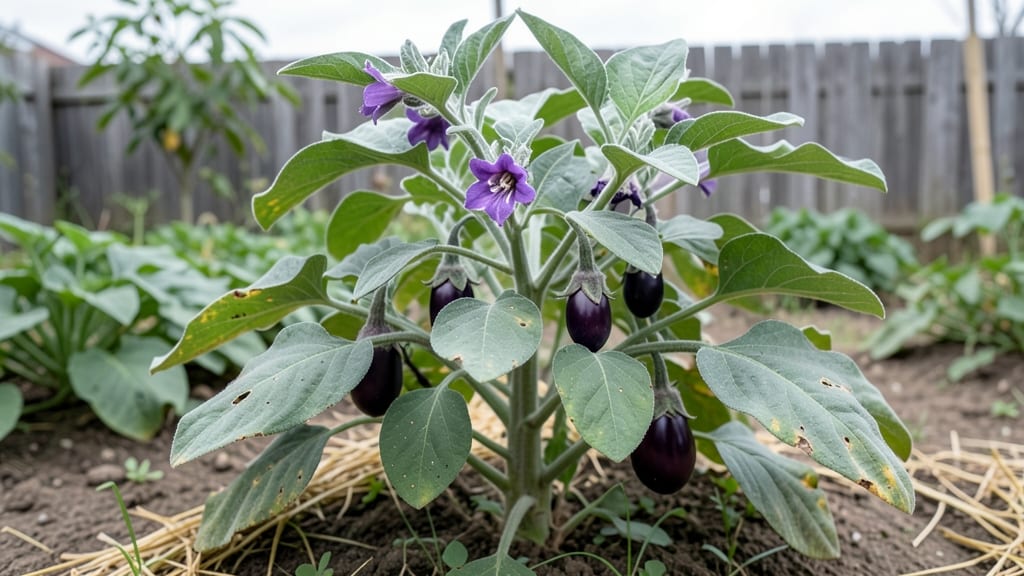
The eggplant flowering stage is where your plants either deliver or disappoint—and I’ve seen both sides. That first purple bloom signals whether you’re headed for a harvest or a head-scratching mystery.
The shape matters: eggplant flowers are unique, with five petals that curve backward like a tiny trumpet, and their color shifts from pale lavender to deep purple as they mature.
Here’s the thing—eggplants are finicky about their environment. Too much heat or humidity, and those flowers drop before setting fruit. Too little light, and they’ll just sit there, wilting. I learned this the hard way after my first season of watching blooms appear only to vanish overnight.
The fix? Consistent moisture, afternoon shade in scorching climates, and a gentle hand when handling the stems.
When you get it right, you’ll see those flowers thicken into glossy, deep purple eggplants in just 6-8 weeks. The texture of a ripe eggplant—smooth, firm, and slightly heavy for its size—is the best reward.
And the flavor? Rich, meaty, and impossible to get from the grocery store. The key is patience and paying attention to those subtle cues.
This works for both backyard gardens and container setups, though container growers need to monitor soil moisture more closely. Once you master the flowering stage, your eggplants will reward you with harvests that put store-bought varieties to shame. Let’s get those blooms turning into fruit.
📚 In This Guide
- What you need
- Instructions
- Tips and common mistakes
- Wrapping up and next steps
What you need
- ● Healthy eggplant seedlings or transplants (choose disease-resistant varieties like 'Black Beauty' or 'Ichiban' for best results).
- ● Well-draining potting mix or garden soil (pH 6.0–6.8; enrich with compost or aged manure before planting).
- ● Balanced fertilizer (10-10-10 or 5-10-10 NPK ratio; 1 tbsp per plant every 2–3 weeks during flowering).
- ● Phosphorus-rich fertilizer (e.g., bone meal or 0-10-0; 1 tsp per plant at transplanting to encourage blooms).
- ● Watering can or drip irrigation system (keep soil consistently moist but not soggy—aim for 1–1.5 inches of water per week).
- ● Handheld magnifying glass or macro lens camera (to inspect flowers for pollination success or pests).
- ● Pruning shears or sharp scissors (sterilized with rubbing alcohol to avoid disease).
- ● Support stakes or cages (for indeterminate varieties; 3–4 ft tall to prevent sprawling).
- ● Organic mulch (straw or shredded leaves; 2–3 inches thick to retain moisture and regulate soil temp).
- ● Grow lights (if indoors; 12–14 hours of light/day to mimic long summer days).
- ● Bees or pollinators (plant bee-friendly flowers like marigolds nearby or hand-pollinate with a soft paintbrush).
- ● Calcium supplement (e.g., crushed eggshells or gypsum; prevents blossom-end rot in fruits).
- ● Neem oil or insecticidal soap (to deter pests like aphids or whiteflies that stress plants).
- ● Garden journal (track flowering dates, weather, and fertilizer adjustments for future reference!).
Instructions for identifying and supporting eggplant blooms
Here's how I help eggplants transition from foliage to fruit production efficiently.
Recognize True Flowering Signs
Eggplants produce small, star-shaped flowers that appear in the leaf axils—where the stem meets a leaf. These blooms are usually lavender to white in color and only about 1 inch wide. The key is spotting them early, ideally when they're still in bud form, because that's when you can influence fruit set most effectively.
Watch for purple or white buds that swell slightly before opening. These buds will eventually bloom into the familiar star-shaped flowers. If you're growing in containers, check the undersides of leaves first—indoor plants often bloom earlier than outdoor ones due to the controlled environment.
Ensure Optimal Conditions for Pollination
Eggplants are self-pollinating, but they need warmth and gentle movement to release pollen. Maintain daytime temperatures between 70-85°F—below 65°F, flowers may drop before setting fruit. If your garden runs cooler, consider using a row cover or moving potted plants to a warmer spot during the day.
Lightly shake plants in the morning when flowers are open to help pollen transfer. You'll see tiny hairs on the flower's center—these collect and distribute pollen. If you notice flowers wilting or falling off within a day, your plant may be stressed from temperature swings or insufficient water.
Support Flowers with Proper Watering and Feeding
Water at the base of the plant only, keeping soil consistently moist but never soggy. Eggplant roots are sensitive to overwatering, which can cause blossom end rot in developing fruit. Aim to water when the top 1-2 inches of soil feel dry to the touch. Mulch around the base with 2-3 inches of organic mulch to retain moisture and regulate soil temperature.
Feed with a balanced fertilizer (like 10-10-10) every 2-3 weeks once flowers appear. Look for dark green, glossy leaves—this is your sign the plant is absorbing nutrients well. If leaves yellow or stems weaken, reduce fertilizer and focus on watering consistency instead.
Protect Flowers from Dropping
Eggplant flowers often drop due to temperature stress, drought, or overcrowding. If you see buds forming but not opening, check for hot afternoons above 90°F—this can cause buds to abort. Provide afternoon shade with a lightweight shade cloth if needed, especially in southern climates.
Thin crowded plants to 18-24 inches apart to improve air circulation. You'll notice fewer flowers dropping and stronger stems. If flowers fall frequently, inspect for pests like aphids or spider mites, which weaken plants. Treat with neem oil if you spot sticky residue on leaves.
Hand-Pollinate if Needed
On cloudy days or in greenhouses, use a soft paintbrush to transfer pollen from one flower to another. Gently brush the center of one open flower, then another, to ensure cross-pollination. This mimics natural wind or bee activity. Do this in the morning when flowers are freshest.
After hand-pollinating, mark the stem with a small flag or ribbon to track fruit development. You'll see tiny eggplants form within 7-10 days—these are your reward for supporting the flowering stage. Keep an eye out for small, round bumps where flowers were pollinated successfully.
Tips & tricks for perfect eggplant flowering
Here's what nobody tells you about getting your eggplants to bloom like crazy—these are the tricks I've learned after watching dozens of plants struggle.
Bud Inspection Tip: In Step 1, when you spot those purple or white buds, give them a gentle squeeze to test firmness. Healthy buds should feel slightly plump but not mushy. If they're soft or shriveled, your plant might be underwatered or stressed from temperature swings. This early check helps you catch problems before flowers drop.
Temperature Troubleshooting: The 70-85°F range in Step 2 is critical—any dip below 65°F can cause buds to abort. I've seen plants in cooler climates produce flowers that never open because they got chilled overnight. If you're in a transitional season, move potted plants to a sheltered spot or use a small greenhouse to maintain warmth during the day.
Watering Wisdom: Step 3's advice about watering at the base is gold, but here's the extra detail: water in the early morning so leaves have all day to dry. Wet foliage at night invites fungal diseases, which can stress plants and cause flowers to drop. I've also found that a drip irrigation system keeps moisture consistent without wetting leaves—game-changer for container gardens.
Hand-Pollination Hack: For Step 5, if you don't have a paintbrush, use a cotton swab instead. The key is to be gentle—press lightly against the center hairs of one flower, then another. I've had great success with this method even in overcast conditions. And here's a pro move: after pollinating, give the stem a tiny twist to help the flower stay attached while it develops.
Pro Tips for Eggplant Flowering Stage
- Here's what nobody tells you about getting your eggplants to bloom like crazy—these are the tricks I've learned after watching dozens of plants struggle.
- Bud Inspection Tip: In Step 1, when you spot those purple or white buds, give them a gentle squeeze to test firmness.
- Temperature Troubleshooting: The 70-85°F range in Step 2 is critical—any dip below 65°F can cause buds to abort.
Frequently asked questions
Got questions about eggplant flowering? You’re not alone! Here are some of the most common concerns—and their answers—to help you navigate this critical stage with confidence.
How do I know if my eggplant is ready to flower?
Eggplant plants are ready to flower when they reach about 6–8 weeks after transplanting (or 8–10 weeks from seed) and develop small, trumpet-shaped white or purple flowers at the leaf nodes. Look for healthy, mature foliage (at least 12–18 inches tall) and new growth at the tips—this signals the plant is primed for blooming. Pro tip: Morning sunlight on flowers means they’re opening soon!
Why isn’t my eggplant flowering yet? What can I do?
If your eggplant is all leaves, no flowers, it’s likely due to insufficient light, heat, or nutrients. Try these fixes:
- More sunlight: Eggplants need 6–8+ hours of direct sun daily. Move potted plants to sunnier spots or supplement with grow lights.
- Warmth: Temperatures below 60°F (15°C) can stall flowering. Use row covers or black plastic mulch to warm soil.
- Fertilizer boost: Switch to a low-nitrogen, high-phosphorus fertilizer (like 5-10-10) to encourage blooms.
What should I do if my eggplant flowers but no fruit forms?
If flowers appear but drop off or don’t develop into fruit, it’s often due to pollination issues, temperature stress, or over-fertilization. Try these solutions:
- Hand-pollinate: Gently tap flower stems with a paintbrush to transfer pollen (especially in greenhouses or rainy climates).
- Check temps: Extreme heat (>90°F/32°C) or cold (<50°F/10°C) can cause flower drop. Provide shade cloth if needed.
- Adjust fertilizing: Too much nitrogen = more leaves, fewer flowers. Switch to a balanced or phosphorus-heavy feed.
Can I force eggplants to flower faster?
While you can’t rush the process, you can optimize conditions to speed up flowering:
- Prune selectively: Remove lower leaves to improve airflow and sunlight penetration to the stem.
- Water wisely: Deep, infrequent watering (1–2 inches per week) prevents stress that delays blooms.
- Use growth regulators: A spray of 2,4-D or GA3 (follow label instructions) can encourage flowering in stubborn plants.
What if my eggplant flowers too early in the season?
Early flowers (before hardening frost risk passes) are vulnerable to cold damage. Protect them with:
- Row covers: Lightweight fabric (like frost cloth) can shield flowers until nighttime temps rise above 50°F (10°C).
- Container flexibility: Move potted plants to a warmer, sheltered spot (like near a south-facing wall).
- Remove early blooms: If frost is imminent, snip off flowers to redirect energy to root and stem growth for a later, stronger harvest.
Wrapping up and next steps
Mastering the eggplant flowering stage is your ticket to a garden bursting with vibrant, productive plants! 🌸 By recognizing the signs—from bud formation to pollination cues—and applying the right techniques, you’re well on your way to a bountiful harvest.
Don’t stop here: experiment with companion plants, keep an eye on pests, and fine-tune your care routine for even better results next season.
You’ve got this! 🌱 Now, grab those pruning shears and get ready to watch your eggplants thrive—one bloom at a time.