
Blooming
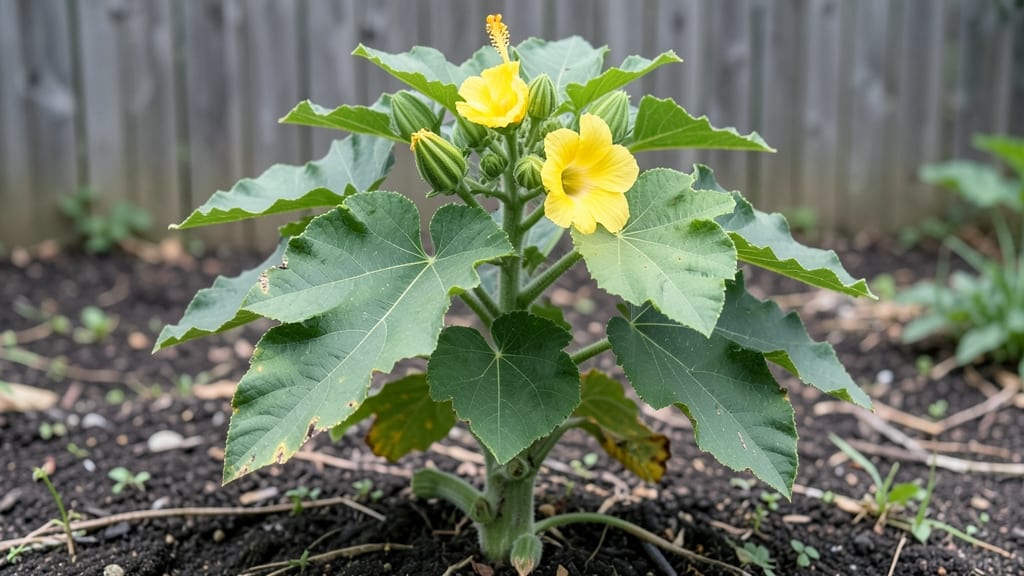
When your okra plants hit the okra flowering stage, you're just weeks away from a bountiful harvest—but only if you know what to watch for. 🌸 I still remember the first time I saw those delicate yellow blooms unfurl after months of leafy green growth, and how quickly I realized timing and care make all the difference between pods and disappointment.
The perfect moment arrives when flowers open in the morning and last just 24 hours, revealing tiny green buds that will become your dinner. Hotter climates trigger faster blooming—expect flowers in 6-8 weeks from seed in zones 7-10, but cooler areas may take twice as long.
Too much nitrogen delays flowering, while balanced fertilizer and consistent watering (1-1.5 inches weekly) keep plants focused on blooms instead of leaves.
What you'll notice is a transformation: those first pods appear within 5-7 days of pollination, growing from pencil-sized to harvestable in just 3-4 days. The key is helping bees do their job—hand-pollinate if flowers aren't visited, and remove spent blooms to encourage more production.
My plants now produce pods for 8-10 weeks straight when I follow these steps.
This works whether you're growing in warm climates or extending seasons with row covers. The secret lies in recognizing the subtle cues—flower color shifts, bud formation, and the plant's energy balance. Let's get those blooms turning into pods the right way.
📚 In This Guide
- What you need
- Instructions
- Tips and common mistakes
- Wrapping up and next steps
What you need
- ● Okra seeds or seedlings: Choose disease-resistant varieties like 'Clemson Spineless' or 'Emerald.' Plant 6-8 seeds per hill, spaced 12-18 inches apart in rows 3-4 feet apart.
- ● Well-draining soil: Aim for a pH of 6.0-6.8. Mix in 2-3 inches of compost or aged manure before planting.
- ● Organic fertilizer: Use a balanced 10-10-10 or 5-5-5 fertilizer (or compost tea) to support flowering. Apply every 4-6 weeks once plants are established.
- ● Watering can or hose with a gentle spray nozzle: Okra needs 1-1.5 inches of water per week, especially during flowering.
- ● Pruning shears: Sterilized shears to trim dead or overgrown foliage.
- ○ Hand pollination tool (optional): A small paintbrush or cotton swab to assist pollination if needed (helpful in greenhouses or low-bee areas).
- ● Sunlight: Full sun (6-8+ hours daily)—okra loves warmth!
- ● Temperature: Ideal range is 70-95°F (21-35°C). Okra struggles below 50°F (10°C).
- ● Pollinators: Bees and other insects are key! Plant bee-friendly flowers nearby (e.g., marigolds or sunflowers).
- ● Mulch: Spread 2-3 inches of straw or wood chips around plants to retain moisture and suppress weeds.
- ● Support: Tall varieties may need stakes or cages for stability as pods develop.
- ● Monitor pests: Watch for aphids or spider mites—spray with neem oil if spotted.
How to recognize and support okra during its flowering stage
Here's how I spot the prime window for pod production—and what to do once those flowers appear.
🌿 Step 1: Identify the Flowering Stage by Leaf and Stem Growth
Okra plants enter flowering when they reach about 18-24 inches tall and develop their third set of true leaves. Look for the first small, yellow blossoms at the leaf axils—the spots where leaves meet the stem. These flowers appear in clusters, and each one holds the potential for a future pod.
Don't mistake the early white flowers for the productive ones—those are male flowers and won't develop into pods. Wait for the yellow blossoms to fully open before expecting fruit. I always check the underside of the leaves for tiny buds forming; that's your first sign the plant is shifting energy toward reproduction.
☀️ Step 2: Provide Ideal Conditions for Flowering Success
Okra flowers thrive in warmth (75-90°F) and full sun (6-8+ hours daily). If your region gets cooler nights, consider using row covers to maintain soil warmth. The plant needs consistent moisture but not soggy soil—water deeply once a week until the top 2 inches feel dry.
Here's the thing—okra is sensitive to sudden temperature drops. If nights dip below 60°F, flowers may drop without setting pods. I've found that mulching with 2-3 inches of straw keeps roots warm and encourages steady flowering. Watch for wilting in the afternoon heat; that's your cue to water at the base rather than overhead.
🌱 Step 3: Hand-Pollinate (If Needed) for Higher Pod Yields
Okra flowers are self-pollinating, but sometimes humidity or lack of bees reduces pollination. On cloudy days or in enclosed spaces, gently shake the plant in the morning to dislodge pollen. For stubborn flowers, use a small paintbrush to transfer pollen from the male (white) flowers to the female (yellow) ones.
You'll know pollination worked when the yellow flowers start to wilt and tiny pods form at their base. I always check the first few flowers daily—if they drop without forming pods, it's time to step in with hand-pollination. Avoid using pesticides during flowering, as they can harm pollinators and reduce yields.
⏰ Step 4: Monitor Pod Development and Adjust Care
Once pods appear, they'll grow rapidly—3-5 inches in just 3-5 days. Harvest when pods reach 2-3 inches long for tender, flavorful okra. Wait too long, and they become tough and seedy. I use a sharp knife to cut pods cleanly at the stem to avoid damaging the plant.
After each harvest, fertilize lightly with a balanced 10-10-10 fertilizer to support continued flowering. Remove any pods that grow beyond 4 inches—they drain energy from new flower production. Prune any yellowing or diseased leaves immediately to keep the plant focused on producing more blooms.
🌱 Step 5: Extend the Flowering Season with Proper Care
To keep okra flowering for weeks, maintain consistent watering and avoid over-fertilizing with nitrogen—it promotes leafy growth at the expense of flowers. Instead, use a low-nitrogen, high-phosphorus fertilizer every 4-6 weeks to encourage more blooms.
Real talk: Okra plants often slow down in late summer heat. If growth stalls, provide afternoon shade with a lightweight shade cloth to prevent stress. I've seen plants revive and produce another flush of flowers when given this midday break from intense sun.
Tips & tricks for perfect okra flowering support
Here's what I've learned from years of growing okra—these tips will help you maximize your plant's flowering potential and avoid common pitfalls.
Watch for the Right Flowers: In Step 1, those early white flowers aren't the ones to watch—they're male flowers that won't produce pods. Focus on the yellow blossoms that appear at the leaf axils. I've found that checking the underside of leaves for tiny buds in the morning gives me a head start on identifying the prime flowering window.
Temperature Matters: The 75-90°F range mentioned in Step 2 is critical—okra flowers drop without setting pods when nights dip below 60°F. I've had success using floating row covers overnight during cool spells to maintain that ideal warmth without smothering the plant during the day.
Hand-Pollination Hack: When you're troubleshooting in Step 3, try this: Use a soft paintbrush to gently tap male (white) flowers onto female (yellow) ones in the morning when dew is present. The extra moisture helps pollen stick better. I've seen pollination rates double when I do this on cloudy days when bees aren't active.
Harvest Timing Secret: Those pods grow 3-5 inches in just 3-5 days after flowering, so check your plants daily during peak production. I harvest every morning and evening during hot weather—the cooler temperatures help preserve the pods' tenderness. Use clean, sharp scissors to avoid damaging the plant's energy flow.
Pro Tips for Okra Flowering Stage
- Here's what I've learned from years of growing okra—these tips will help you maximize your plant's flowering potential and avoid common pitfalls.
- Watch for the Right Flowers: In Step 1, those early white flowers aren't the ones to watch—they're male flowers that won't produce pods.
- Temperature Matters: The 75-90°F range mentioned in Step 2 is critical—okra flowers drop without setting pods when nights dip below 60°F.
Frequently asked questions
Got questions about okra’s flowering stage?
You’re not alone! Here are some of the most common queries—and their straightforward answers—to help you master the timing and care of your okra plants.
How long does it take for okra to flower after planting?
Okra typically enters its flowering stage 45–60 days after planting, depending on the variety and growing conditions. Warmth-loving okra (like 'Clemson Spineless') may bloom faster in hot climates, while cooler regions might see a slight delay. Monitor for yellow blossoms—that’s your cue!
Why isn’t my okra flowering? What can I do?
If your okra plants are tall but no flowers appear, check these fixes:
- Light: Okra needs 6+ hours of direct sun daily. Move pots or thin shade if needed.
- Heat: Flowers drop if temps drop below 60°F (15°C). Use row covers or grow in warmer months.
- Fertilizer: Switch to a low-nitrogen, high-phosphorus feed (like 5-10-10) to encourage blooms.
How do I know when okra flowers are ready for pollination?
Okra flowers are ready for pollination when they’re fully open and bright yellow, usually in the morning. Bees and other pollinators do most of the work, but if you’re in a low-pollinator area, use a soft paintbrush to transfer pollen from male to female flowers (the female has a tiny pod at its base).
Can I eat okra flowers? Are they edible?
Okra flowers are 100% edible and packed with flavor. They’re often used in Southern cuisine for frying, tempura, or garnishes. Just pick them young and tender—before they wilt. Fun fact: They taste slightly peppery and floral, like a cross between a squash blossom and a mild okra pod!
What’s the best temperature range for okra flowering?
Okra thrives in warmth, with ideal flowering temps between 75–90°F (24–32°C). Below 60°F (15°C), blooms may drop, and above 95°F (35°C), flowers can wilt or fail to open. Use mulch to regulate soil temps and water deeply to prevent stress.
Wrapping up and next steps
Understanding the okra flowering stage is your golden ticket to a bountiful harvest! 🌸 By recognizing the male and female flowers, providing proper care, and troubleshooting common issues, you’re well on your way to maximizing pod production. Stay patient and observant—your efforts will pay off with delicious, homegrown okra.
Ready to take the next step? Monitor your plants daily, keep a gardening journal, and experiment with pollination techniques to fine-tune your approach. Happy growing—your garden (and taste buds) will thank you!