Container Gardens
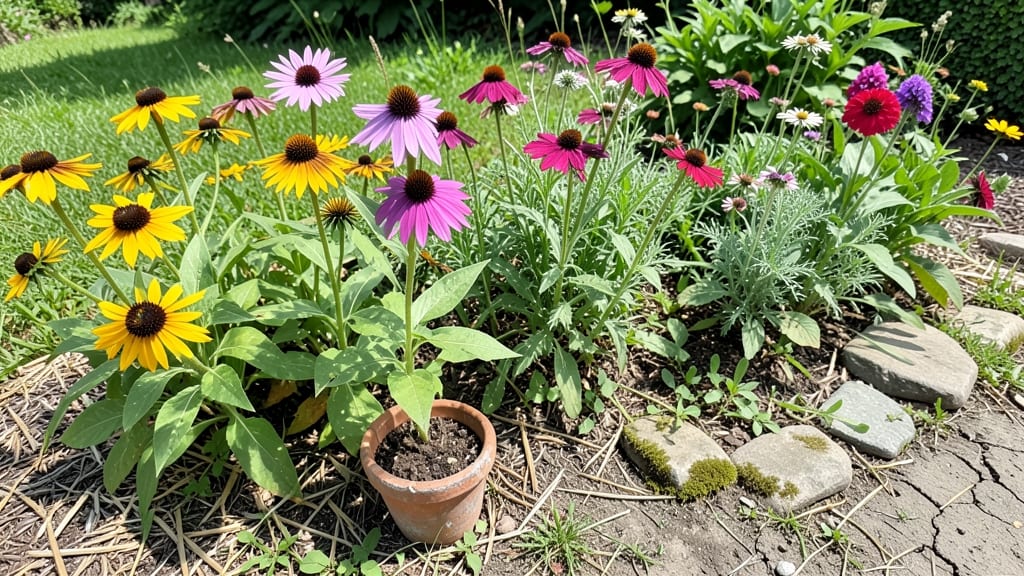
Wildflowers in containers turn even the tiniest balcony into a buzzing pollinator paradise—no sprawling garden required. After years of battling weeds in my backyard, I discovered that wildflowers thrive just as happily in pots as they do in beds, but with none of the chaos.
The key is choosing the right mix of hardy annuals and perennials that self-seed reliably, like cosmos, black-eyed Susans, and salvia, which all bounce back year after year with minimal fuss.
You’ll need containers with drainage holes (even old tin cans work), a lightweight potting mix designed for wildflowers, and a sunny spot that gets at least six hours of light daily. The beauty of containers is their mobility—move them to follow the sun or protect them from late frosts.
My favorite setup uses tiered trays to create vertical interest while keeping everything accessible for deadheading spent blooms. Plus, you’ll attract butterflies and bees within weeks, transforming your space into a miniature ecosystem.
The payoff is year-round color with almost no maintenance. Even in winter, evergreen varieties like lavender and ornamental grasses add texture, while spring-blooming poppies and sweet alyssum create a soft, dreamy display.
The secret to longevity? Deadhead regularly to encourage more blooms and refresh the soil every couple of years with compost. Containers also make it easy to experiment with seasonal themes—think monochromatic blues for summer or fiery reds and oranges for fall.
Perfect for renters, small spaces, or anyone tired of fighting weeds. Once you try it, you’ll wonder why you ever gardened in the ground. Let’s get those containers planted!
📚 In This Guide
- What you need
- Instructions
- Tips and common mistakes
- Wrapping up and next steps
What you need
- ● Containers: At least 3–5 containers (5–10 inches deep) with drainage holes. Options: terracotta pots, hanging baskets, or window boxes.
- ● Wildflower seeds: Choose a pre-mixed wildflower blend (e.g., cosmos, zinnias, black-eyed Susans) or single-species seeds for bold color.
- ● Potting soil: A well-draining, lightweight mix (e.g., 60% potting soil + 40% perlite or sand). Aim for 1–2 gallons per container.
- ● Drainage material: Small pebbles, gravel, or broken pottery (½ inch layer) to prevent root rot.
- ● Watering can or spray bottle: For gentle hydration (avoid oversaturating!).
- ○ Fertilizer (optional but helpful): A slow-release, low-nitrogen fertilizer (e.g., 5-10-5 ratio) or compost tea.
- ● Mulch (e.g., straw or shredded leaves) to retain moisture.
- ● Decorative stones or mosaic tiles for container styling.
- ● Self-watering trays or wicks for drought-prone areas.
- ● Garden gloves and knee pads for comfort.
Step-by-step instructions for growing wildflowers in containers
Wildflowers thrive in containers with the right approach—here’s how to keep them blooming beautifully year after year.
Select the Right Containers and Drainage
Choose containers with drainage holes—wildflowers despise soggy roots. I prefer terra cotta pots for their breathability, but any container with at least 6 inches of depth works. If your pots lack holes, drill them yourself or layer gravel at the bottom for drainage. Place a mesh screen over the holes to prevent soil from washing out while still allowing excess water to escape.
Wildflowers spread aggressively, so 10-12 inches in diameter per container ensures they have room to grow without crowding. For four containers, a 12-inch diameter works perfectly—just avoid shallow dishes, which dry out too quickly. Group containers close together to create a cohesive display while still allowing airflow between plants.
Use a Well-Draining Soil Mix
Wildflowers reject heavy garden soil—it compacts and suffocates their roots. Instead, blend two parts potting mix with one part perlite or coarse sand to improve drainage. I add a slow-release fertilizer (like 10-10-10) to the mix for steady nutrition without overfeeding. Fill each container to 1 inch below the rim, leaving space for watering.
Press the soil lightly with your fingers to remove air pockets, but don’t compact it—wildflowers need loose, aerated soil to establish roots quickly. A lightly moistened mix is ideal; if it clumps when squeezed, add more perlite. This prevents waterlogging while keeping roots hydrated.
Choose the Right Wildflower Mix
Skip single-species seeds—wildflower mixes with native varieties (like black-eyed Susan, coneflower, or cosmos) ensure continuous blooms. For four containers, use one packet of wildflower seeds (about ½ pound), dividing evenly. Sprinkle seeds ¼ inch deep—wildflowers need light to germinate, so don’t bury them too deeply. Lightly press them into the soil to ensure contact.
Cover containers with a humidity dome or plastic wrap to retain moisture while seeds germinate. Place them in bright, indirect light (like a sunny windowsill) until sprouts appear—usually 7-14 days. Avoid direct sun during germination, as it can dry out the soil too quickly. Once seedlings emerge, remove the cover immediately to prevent fungal growth.
Provide Sun and Water Wisely
Wildflowers crave full sun (6+ hours daily)—place containers on a south-facing patio or balcony. If shade is unavoidable, opt for shade-tolerant varieties like aster or lobelia. Water deeply once a week, letting water run through the drainage holes. Overwatering is the fastest way to kill wildflowers—let the top inch of soil dry out between waterings.
After the first flush of blooms, deadhead spent flowers to encourage more blooms. Snip off faded blooms with clean scissors, cutting just above the next set of leaves. This redirects energy to new growth. In late summer, reduce watering slightly to prepare plants for dormancy—wildflowers often go dormant in winter but bounce back in spring.
Overwinter and Renew for Next Year
In fall, trim back dead foliage but leave seed heads for winter interest and next year’s blooms. Move containers to a sheltered spot (like a garage or covered porch) where temps stay above 20°F. Water sparingly—just enough to keep soil from drying out completely. Most wildflowers survive winter as dormant plants and regrow in spring.
In early spring, refresh the soil by adding a 1-inch layer of compost to the surface. This replenishes nutrients without disturbing roots. Thin out crowded seedlings to 4-6 inches apart for better airflow. With proper care, your containers will burst into color again within weeks—no replanting needed.
Tips & tricks for perfect wildflower containers
These pro strategies will help your container wildflowers thrive with minimal fuss and maximum beauty—no green thumb required.
Container Selection: Terra cotta is ideal because it wicks away moisture, but plastic containers work too if you drill drainage holes. For a cohesive look, choose containers with similar shapes and colors—this creates visual harmony without sacrificing the natural wildflower aesthetic. I've found that grouping containers in odd numbers (like three) creates more dynamic displays than even numbers.
Soil Preparation: The two-part potting mix to one-part perlite ratio is non-negotiable—this prevents compaction and mimics wildflowers' natural, well-draining environment. For extra insurance against soggy roots, I add a handful of small pebbles at the very bottom before adding my soil mix. This creates an additional drainage layer that prevents clogging.
Germination Strategy: During those critical 7-14 days of germination, maintain consistent moisture by placing containers on a tray filled with pebbles and water. This creates humidity without waterlogging the soil. Once sprouts appear, remove the cover immediately to prevent fungal growth—wildflowers need airflow almost as much as they need light.
Seasonal Adaptation: In late summer, when temperatures drop and growth slows, reduce watering to every 10-14 days instead of weekly. This mimics natural drought conditions and helps prepare plants for winter dormancy. I've found that wildflowers actually reward this reduced care with more robust spring regrowth.
Pro Tips for Wildflowers In Containers
- These pro strategies will help your container wildflowers thrive with minimal fuss and maximum beauty—no green thumb required.
- Container Selection: Terra cotta is ideal because it wicks away moisture, but plastic containers work too if you drill drainage holes.
- Soil Preparation: The two-part potting mix to one-part perlite ratio is non-negotiable—this prevents compaction and mimics wildflowers' natural, well-draining environment.
Frequently asked questions
Got questions about growing wildflowers in containers?
You’re not alone! Here are answers to the most common queries to help you create a stunning, low-maintenance garden.
What’s the best container size for wildflowers?
Most wildflowers thrive in containers at least 6–12 inches deep with drainage holes. Shallow containers (like window boxes) work for dwarf varieties, while deeper pots (12+ inches) support taller species like coneflowers or black-eyed Susans. Grouping plants in clusters mimics natural spacing—aim for 3–5 plants per square foot.
When is the best time to plant wildflowers in containers?
For spring blooms, plant in early spring (after the last frost). For fall color, opt for late summer/early fall planting. Wildflowers are resilient—just ensure soil temps are above 40°F (4°C) and containers are protected from harsh winds. Pro tip: Pre-soak seeds or use transplants for faster results!
How often should I water container-grown wildflowers?
Wildflowers in containers dry out faster than in-ground plants. Water deeply 2–3 times per week (or daily in extreme heat), ensuring moisture reaches the roots. Let the top inch of soil dry out between waterings. Mulch lightly (with straw or bark) to retain moisture. Overwatering is worse—containers lack natural drainage.
How do I keep pests away from my container wildflowers?
Wildflowers attract beneficial insects (like ladybugs and bees), but aphids or spider mites may appear. Prevent pests with:
- Neem oil spray (weekly preventive treatment).
- Encouraging predatory insects by planting companion herbs (e.g., basil or lavender).
- Inspecting new plants for eggs before adding them.
Most pests are harmless—focus on healthy soil and airflow to deter problems.
Can I reuse the same container for wildflowers year after year?
Yes! Clean and refresh containers annually to prevent disease. Scrub with soapy water, rinse well, and replace old soil (or sterilize it with heat). Add compost or slow-release fertilizer before replanting. Rotate container locations yearly to avoid soil depletion—wildflowers thrive in renewed nutrients.
Will wildflowers survive winter in containers?
Many wildflowers are perennial and return yearly, but container plants need extra protection. Move containers to a sheltered spot (like a garage or under eaves) before hard frosts. Insulate with burlap or mulch (1–2 inches) around the base. Hardier varieties (e.g., yarrow or Russian sage) tolerate cold better than tropical species like zinnias.
Wrapping up and next steps
Growing wildflowers in containers is a joyful, low-maintenance way to bring vibrant color to your space—no yard or yard work required! 🌸 With the right mix of native seeds, well-draining soil, and a little sunlight, you can enjoy seasonal blooms that attract pollinators and add charm to balconies, patios, or windowsills.
Whether you’re a seasoned gardener or just starting out, this approach proves that beauty thrives in simplicity.
Ready to dive in? Start small—pick a container, choose your wildflower mix, and plant with confidence! For extra inspiration, explore container garden designs or join local gardening groups to share your progress. Happy planting! 🌱