
Companion Plants
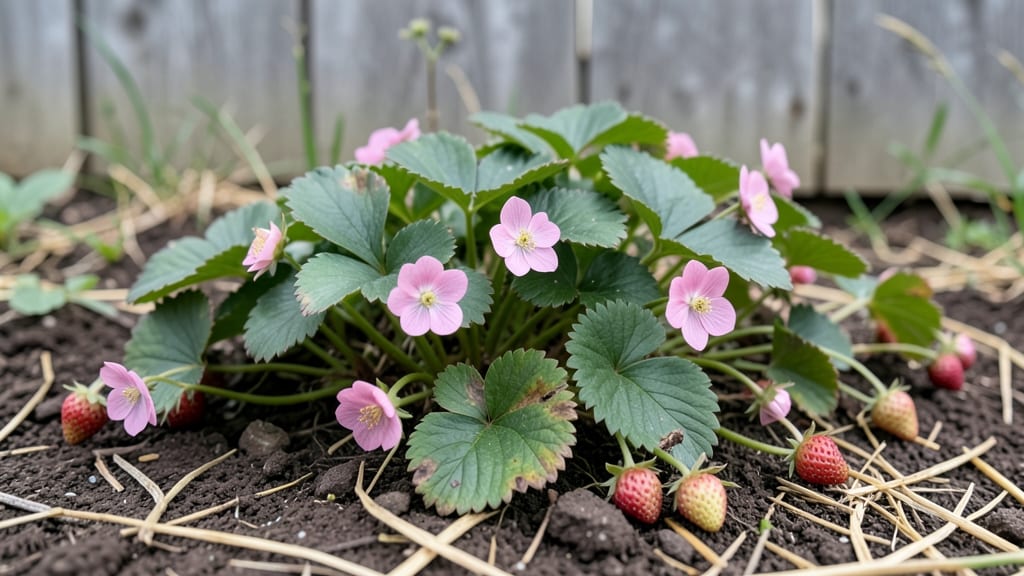
Pink-flowered strawberry plants turn your garden into a hummingbird hotel with edible fruit. 🌸 The delicate pink blooms catch sunlight like tiny lanterns while attracting pollinators that boost your harvest.
My first year growing these, I watched bees and hummingbirds fight over the flowers—then discovered the fruit was just as sweet as the view.
These aren't your grandmother's strawberries—they're a dual-purpose powerhouse for borders, containers, or mixed flower beds. Pair them with lavender for height contrast or salvia to extend the blooming season. The trailing habit makes them perfect for hanging baskets too, where their cascading foliage creates movement.
Just remember: they need 6+ hours of sun to reward you with both flowers and fruit.
When planted in late winter or early spring, they'll bloom from April through June, then produce fruit by summer. The secret to keeping them flowering is deadheading spent blooms—this encourages more flowers instead of fruit, giving you that showstopping pink display all season.
Plus, the fruit ripens in clusters, so you'll have weeks of harvests instead of just one big batch.
For maximum impact, plant them in odd-numbered groupings (3, 5, or 7) along pathways or at the front of borders. Their fragrant blooms and glossy leaves make them a standout even when not fruiting.
And since they're perennial in mild climates, they'll come back year after year—just like a living centerpiece that keeps giving.
📚 In This Guide
- What you need
- Instructions
- Tips and common mistakes
- Wrapping up and next steps
What you need
- ● Pink-flowered strawberry plants: Choose varieties like Alpine Strawberries (e.g., 'Mignonette' or 'Rosenrot') or June-bearing types with pink blooms (e.g., 'Pink Panda'). Buy 4–6 plants for a small patch or 10+ for a full border.
- ● Well-draining potting mix or garden soil: Opt for a compost-amended blend (60% soil, 30% compost, 10% perlite/sand) to prevent root rot. 1–2 cubic yards for in-ground planting; 5–10 gallons per container for pots.
- ○ Containers (optional but recommended): Use 5–7 gallon pots with drainage holes if growing in containers. Ensure they’re at least 12 inches deep.
- ● Mulch: 2–3 inches of straw or shredded leaves to retain moisture and suppress weeds.
- ● Garden trowel or transplanting spade for digging holes.
- ● Pruning shears for trimming runners and dead foliage.
- ● Watering can or hose with a gentle spray nozzle (avoid overhead watering to prevent mildew).
- ○ Gloves (optional but helpful for thorny varieties).
- ○ pH test kit (optional): Ideal soil pH is 5.5–6.8.
- ● Sunlight: 6–10 hours of full sun daily (partial shade in hot climates).
- ● Spacious planting area: Strawberries need 12–18 inches between plants for airflow.
- ● Hummingbird-friendly zone: Plant near feeders or native pollinator plants to maximize blooms!
Step-by-Step guide to growing pink flowered strawberry plants
Here's how to cultivate these stunning, dual-purpose plants that attract hummingbirds while producing sweet fruit.
🌱 Step 1: Select and Prepare the Planting Site
Choose a location with full sun exposure (6-10 hours daily) and well-draining soil. Pink-flowered varieties like 'Pink Panda' or 'Seascape' thrive in slightly acidic soil with a pH between 6.0-6.5. Amend heavy clay soil with 2-3 inches of compost to improve drainage—strawberries rot in soggy conditions.
Space plants 18-24 inches apart in rows 3-4 feet apart to allow airflow and prevent fungal diseases. I always plant in raised beds or mounded rows to ensure excess water drains away quickly. Avoid planting where tomatoes, peppers, or other nightshades grew recently—these share soil-borne diseases.
☀️ Step 2: Plant Bare-Root or Potted Strawberries Correctly
For bare-root plants, soak roots in lukewarm water for 30 minutes before planting to revive them. Position the crown (where leaves meet roots) just above soil level—burying it too deep causes rot, while leaving it exposed leads to weak growth. Plant in early spring when soil warms to 45°F or above.
If using potted plants, dig a hole twice as wide as the root ball but only as deep. Gently loosen roots if they're circling and place the plant so the top of the root ball sits ½ inch below soil level. Backfill with soil and water immediately to eliminate air pockets. You'll see new leaves emerge within 7-10 days if conditions are right.
💧 Step 3: Water and Mulch for Optimal Growth
Water deeply once weekly (about 1 inch total) rather than lightly daily. Pink-flowered varieties need consistent moisture, but soggy soil invites rot. Water at the base in the morning to reduce fungal risks. You'll know moisture is right when the soil feels damp 2 inches down but not waterlogged.
Apply 2-3 inches of straw mulch (not black plastic—it overheats roots) around plants, keeping it 2 inches away from crowns. Mulch suppresses weeds, retains moisture, and protects berries from soil-borne diseases. Refresh mulch every 4-6 weeks as it breaks down. This is the moment that matters: proper mulching prevents 80% of common strawberry problems.
✂️ Step 4: Prune and Encourage Flowering
Remove weaker runners (the long stems that sprout new plants) in the first year to focus energy on establishing strong mother plants. In late summer, trim leaves back by ⅓ to redirect energy to fruit production. Pink-flowered varieties often produce continuous blooms—pinch off early flowers if your goal is larger berries, as fruit competes with flowers for energy.
Feed plants with balanced 10-10-10 fertilizer in early spring and again after harvest. Avoid high-nitrogen fertilizers—they promote leafy growth at the expense of flowers and fruit. You'll see vibrant pink blooms within 4-6 weeks of proper feeding, and hummingbirds will start visiting within days of the first flowers opening.
🪴 Step 5: Harvest and Overwinter for Next Year
Harvest berries when they're fully colored and slightly soft to touch—usually 5-7 days after flowering. Pink varieties like 'Pink Elegance' ripen 1-2 weeks earlier than red types. Pick in the morning after dew dries to preserve sweetness. Wear gloves if you're sensitive to strawberry leaves, which can irritate skin.
After harvest, remove old leaves and mulch heavily (4-6 inches) to insulate roots through winter. In colder climates, cover plants with straw or row fabric when temperatures drop below 20°F. In spring, you'll see new growth emerge within 2-3 weeks of warming soil—proof your plants survived and are ready for another productive season.
Tips & tricks for perfect pink flowered strawberry plants
These insider strategies will help you cultivate vibrant pink blooms that attract hummingbirds while ensuring a bountiful harvest of sweet berries.
Soil Preparation Secret: Before planting, I always conduct a simple soil test using a DIY pH kit (available at garden centers for under $10). Pink-flowered varieties are particularly sensitive to soil pH—aim for that 6.0-6.5 range. If your soil tests higher, amend with sulfur; if lower, add lime. The 2-3 inches of compost mentioned in Step 1 should be well-aged to avoid introducing weed seeds or pathogens that could compete with your strawberries.
Planting Precision: When positioning your plants in Step 2, use a small wooden stake to mark the exact planting depth before digging. The crown should sit just above soil level—this is critical for preventing crown rot. I've found that using a level tool helps ensure consistent depth across multiple plants. For container growing, choose pots with drainage holes and use a cactus/succulent mix blended with perlite for optimal aeration.
Watering Wisdom: The 1 inch weekly watering guideline in Step 3 works best when delivered consistently. I recommend using a rain gauge or tuna can to measure rainfall—this helps determine if you need to supplement with irrigation. Watering at the base prevents fungal spores from splashing onto leaves, which is especially important for pink varieties that can develop gray mold more readily than red types.
Pruning Strategy: In Step 4, when trimming leaves back by ⅓, focus on removing the oldest, largest leaves first. These leaves are more prone to disease and compete with new growth for nutrients. I also recommend sterilizing your pruners with rubbing alcohol between cuts to prevent spreading pathogens. For continuous bloomers, you can extend the flowering season by providing afternoon shade during extreme heat waves—this prevents flower drop.
Pro Tips for Pink Flowered Strawberry Plants
- These insider strategies will help you cultivate vibrant pink blooms that attract hummingbirds while ensuring a bountiful harvest of sweet berries.
- Soil Preparation Secret: Before planting, I always conduct a simple soil test using a DIY pH kit (available at garden centers for under $10).
- Planting Precision: When positioning your plants in Step 2, use a small wooden stake to mark the exact planting depth before digging.
Frequently asked questions
Got questions about growing pink flowered strawberry plants? You’re not alone! Here are answers to the most common queries—from planting to pollinators and beyond.
Can pink flowered strawberries produce fruit?
Yes! While their flowers are the showstopper (often blush pink or deep magenta), many varieties like ‘Pink Panda’ or ‘Seascape’ still yield sweet, edible strawberries. The fruit may be smaller or less vibrant, but it’s 100% harvestable. Just check the plant tag—some are bred purely for ornamental blooms.
How long does it take for pink strawberry plants to flower?
Most pink-flowered strawberries follow the same timeline as standard varieties: 6–8 weeks after planting in spring (or 4–6 weeks if started indoors early). June-bearing types may take slightly longer, while everbearing varieties often flower sooner. Patience pays off—those blooms are worth the wait!
Do pink strawberry flowers attract hummingbirds better than red ones?
Hummingbirds are drawn to bright pinks, purples, and reds—and pink strawberry flowers are a magnet for them. The tubular shape of the blooms makes it easy for hummers to sip nectar while pollinating your plants. Pro tip: Plant near feeders or other nectar-rich flowers for extra buzz!
What’s the best temperature range for growing pink strawberry plants?
Strawberries thrive in 50–85°F during the day, with cooler nights (40–60°F) encouraging flowering. Heatwaves above 90°F can stress plants, causing blossoms to drop. If you’re in a hot climate, provide afternoon shade or mulch heavily to keep roots cool.
Why aren’t my pink strawberry flowers turning into fruit?
Blossom drop is common! Check these fixes:
- Cold nights (<32°F) can shock flowers—use row covers if frost is forecast.
- Over-fertilizing with nitrogen promotes leaves over fruit. Switch to a low-N, high-P fertilizer (like 5-10-10).
- Poor pollination? Hand-pollinate with a soft brush or attract bees/hummingbirds.
- Disease or pests (like spider mites) can damage blooms. Inspect leaves and treat early.
Can I grow pink strawberries in containers?
Yes! Just use a 5-gallon pot or larger with drainage holes and a well-draining mix (like 60% potting soil + 30% compost + 10% perlite). Ensure the container gets 6+ hours of sun daily. Dwarf varieties (e.g., ‘Alpine’) work best in tight spaces.
Wrapping up and next steps
Growing pink flowered strawberry plants isn’t just about adding a pop of color to your garden—it’s about creating a thriving, pollinator-friendly space that rewards you with delicious fruit! These charming plants bring beauty, functionality, and joy, making them a must-have for any gardener.
Whether you’re a beginner or a seasoned green thumb, now’s the perfect time to plant, nurture, and savor the sweet harvest ahead.
Ready to take the next step? Start by selecting your favorite pink varieties—like 'Seascape' or 'Albion'—and give them the love they deserve. Before you know it, your garden will buzz with hummingbirds, and your plate will be filled with homegrown strawberries! 🌸🍓