Flowers
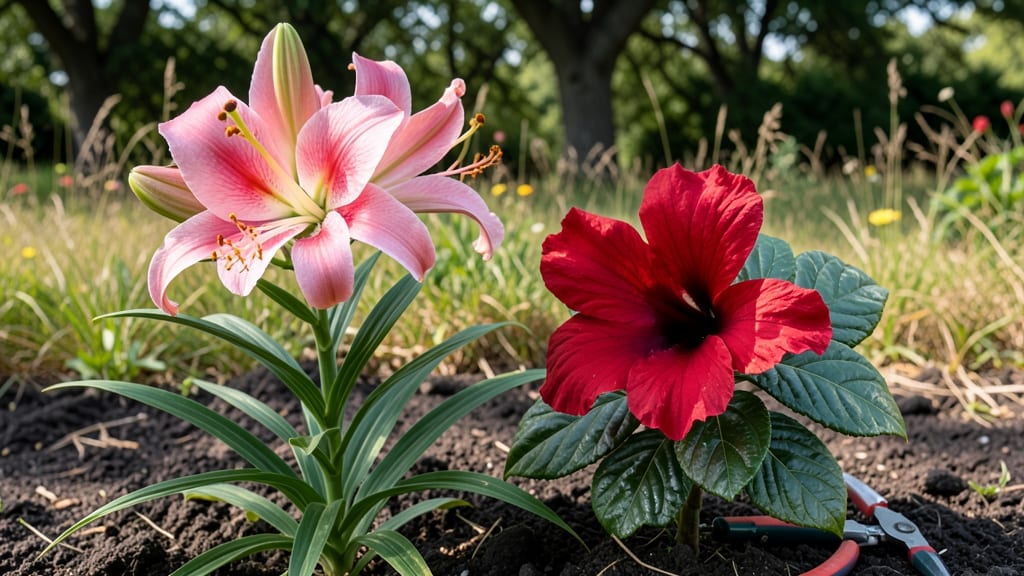
Pairing lilies and hibiscus flowers creates a garden showstopper that feels like a tropical escape in your own yard. 🌺 The secret lies in their striking color contrasts—deep reds, sunny yellows, and velvety purples—that make every border or patio container pop.
My first attempt with these two plants transformed a dull corner into a summer-long spectacle, and I’ve been experimenting with combinations ever since. The key to making it work is sunlight and spacing.
Both thrive in full sun (6+ hours daily), but hibiscus needs slightly more moisture—think of them as the dramatic diva and the lily as the elegant supporting actor. Place them 18-24 inches apart in containers or 2-3 feet apart in garden beds to let their foliage mingle without crowding.
The result? A layered look that draws the eye and fills your space with texture. You’ll end up with bold, high-impact blooms that last from early summer through fall, with hibiscus often extending into cooler months.
The contrast of lily’s upright spikes against hibiscus’s rounded blooms creates movement, while their fragrance—sweet and spicy—lingers in the evening air. This combo works in tropical, cottage, or formal gardens, so it’s versatile enough for any style.
For extra drama, pair them with salvia or canna lilies for height, or add shrubs like abelia for structure. Just avoid planting near roses—their competing needs can lead to disappointment. Ready to make your garden unforgettable?
📚 In This Guide
- What you need
- Instructions
- Tips and common mistakes
- Wrapping up and next steps
What you need
- ● Lily bulbs or plants: Choose from Asiatic, Oriental, or Stargazer lilies (6–10 bulbs for a bold impact).
- ● Hibiscus plants: Opt for tropical (Hibiscus rosa-sinensis) or hardy (Hibiscus moscheutos) varieties (2–4 mature plants for contrast).
- ● Well-draining potting mix or garden soil: 5–10 gallons, enriched with compost (for containers or in-ground planting).
- ● Slow-release fertilizer: Balanced 10-10-10 or organic options like fish emulsion (1–2 cups per planting area).
- ○ Mulch (optional but recommended): Pine bark or shredded leaves (2–3 inches) to retain moisture and suppress weeds.
- ● Garden trowel or hand shovel: For planting bulbs/plants (6–8 inches deep for lilies, 12–18 inches for hibiscus roots).
- ● Pruning shears: Sharp, sterilized pair for trimming dead blooms or shaping plants.
- ● Watering can or hose with gentle nozzle: Lilies need consistent moisture; hibiscus thrives with deep watering (1–2 gallons per plant, 2–3x/week).
- ○ Stakes or supports (optional): Bamboo stakes or cages for tall hibiscus varieties (3–4 feet).
- ● Sunlight access: Prerequisite! Full sun (6+ hours/day) for both lilies and hibiscus to flourish.
- ● Complementary flowers: Add salvia or canas for texture (3–5 plants).
- ● Decorative stones or pebbles: For a polished look around planted areas.
- ● Garden gloves: Protect your hands while handling thorny hibiscus stems.
- ● Photography gear: Capture those dramatic color contrasts—your future Instagram feed will thank you! 📸
How to pair lilies and hibiscus for stunning season-long color
Here’s the method I’ve used for years to create bold, high-impact garden beds where these two powerhouses shine together.
🌱 Step 1: Choose Complementary Planting Locations
Lilies demand full sun—at least 6 hours daily—while hibiscus thrives in morning sun with afternoon shade in hotter climates. I position hibiscus near the north side of the bed and lilies on the south or west exposure. This ensures both get their light needs met without competing for the same space.
Check your garden’s sun patterns for at least 2 weeks before planting. Move temporary stakes around to mark the sunniest and shadiest spots—you’ll see dramatic differences in how light shifts throughout the day. Lilies will bolt and flop without enough sun, while hibiscus leaves will scorch if exposed to harsh afternoon rays.
🪴 Step 2: Prepare the Soil for Both Plant Types
Lilies prefer well-draining soil with a slightly acidic to neutral pH (6.1-7.0), while hibiscus loves rich, slightly acidic soil (5.5-6.5) with plenty of organic matter. I blend 3 inches of compost into the top 12 inches of soil for hibiscus, while lilies get a mix of 50% garden soil and 50% perlite or sand to prevent root rot.
Amend the soil in 12-inch wide trenches where each plant will go. For hibiscus, work in a handful of slow-release fertilizer (10-10-10) at planting time. Lilies, however, don’t need extra fertilizer—they’ll thrive in leaner soil. Water the amended soil deeply 24 hours before planting to help it settle.
☀️ Step 3: Plant Lilies and Hibiscus for Optimal Growth
Plant lily bulbs 6-8 inches deep and 6-12 inches apart, depending on the variety. Larger bulbs like Stargazer lilies need the extra space, while smaller types like Asiatic lilies can be closer together. Hibiscus plants should go 8-10 feet apart to allow for their mature size—crowding leads to weak stems and fewer blooms.
Place hibiscus slightly deeper than their container depth to encourage strong root establishment. For lilies, orient the bulb with the pointed end facing up—this ensures the shoot grows straight toward the surface. Water immediately after planting to eliminate air pockets around the roots, then mulch with 2-3 inches of organic mulch to retain moisture and regulate soil temperature.
💧 Step 4: Water and Fertilize for Continuous Blooms
Lilies need 1 inch of water weekly, but hibiscus demands 1.5-2 inches during peak bloom season. I water hibiscus at the base in the morning to prevent fungal issues, while lilies get a deep soak every 5-7 days once established. Use a moisture meter to check—lilies wilt dramatically when thirsty, while hibiscus leaves turn yellow and crispy.
Fertilize hibiscus every 4-6 weeks with a balanced liquid fertilizer (20-20-20), but hold off on lilies until they’re actively growing in spring. Over-fertilizing lilies leads to leafy growth at the expense of flowers. Instead, I side-dress lilies with aged compost in early spring—just a light layer around the base.
✂️ Step 5: Prune and Maintain for Season-Long Drama
Deadhead spent lily blooms to encourage more flowers, but leave the seed pods for winter interest. Hibiscus, however, benefits from light pruning after each flush of blooms—cut back stems by one-third to promote bushier growth. I prune hibiscus in late summer to extend the blooming season into fall.
Watch for aphids on new lily shoots and mealybugs on hibiscus leaves—both pests thrive in crowded, humid conditions. Spray with neem oil at the first sign of trouble. In late fall, cut back hibiscus stems to 6 inches tall and mulch heavily to protect roots from freezing. Lilies, being hardy, can stay in the ground year-round with their mulch layer intact.
Tips & tricks for perfect lilies and hibiscus pairings
These pro strategies will help you create a showstopping garden display where both lilies and hibiscus thrive together.
Sun Mapping Secret: Before planting, use a white board to track sunlight patterns for those crucial 2 weeks mentioned in Step 1. Place it in your garden bed and mark sun/shade transitions every few hours. This visual map reveals exactly where to place your hibiscus (north side) and lilies (south/west) for optimal light exposure. I've seen dramatic differences between morning and afternoon sun intensity that completely change plant performance.
Soil pH Precision: Test your soil pH before amending—lilies need that 6.1-7.0 range while hibiscus prefers 5.5-6.5. If your soil is too alkaline, add elemental sulfur to lower pH for hibiscus, or use pine needles for lilies. I've found that hibiscus actually tolerates slightly more acidic conditions than lilies, so you can blend their soil zones to create a transitional area between the two plants.
Planting Depth Hack: For hibiscus, dig a hole slightly deeper than the container depth and loosen the roots before placing. This encourages stronger root establishment. With lilies, use a dibble or pencil to make holes exactly 6-8 inches deep—any shallower and they'll flop, any deeper and they'll struggle to emerge. I've planted hundreds of bulbs and this precise depth makes all the difference in emergence rates.
Watering Strategy: The 1.5-2 inches hibiscus needs during peak bloom can be delivered through soaker hoses placed at the base, while lilies benefit from deep watering every 5-7 days using a watering wand. This targeted approach prevents fungal issues on hibiscus while ensuring lilies get that deep, thorough hydration without becoming waterlogged. Morning watering for hibiscus is non-negotiable—it prevents those dreaded fungal spores from settling on leaves overnight.
Pro Tips for Lilies And Hibiscus Flowers
- These pro strategies will help you create a showstopping garden display where both lilies and hibiscus thrive together.
- Sun Mapping Secret: Before planting, use a white board to track sunlight patterns for those crucial 2 weeks mentioned in Step 1.
- Soil pH Precision: Test your soil pH before amending—lilies need that 6.1-7.0 range while hibiscus prefers 5.5-6.5.
Frequently asked questions
Got questions about pairing lilies and hibiscus flowers for showstopping garden displays? Here are some of the most common queries—plus expert answers to help you create a stunning, low-maintenance floral combo!
Can lilies and hibiscus grow together in the same pot?
While they can share a large container, it’s tricky! Lilies prefer well-draining soil and partial shade, while hibiscus thrives in full sun and moist, rich soil. Use a minimum 18-inch pot with separate root zones, and monitor drainage closely to avoid root rot. For easier care, plant them in the ground with 3–4 feet between clumps.
When is the best time to plant lilies and hibiscus together?
Lilies love spring planting (after the last frost), while hibiscus prefers early spring or late summer (before fall’s first chill). If planting together, aim for late spring—this gives hibiscus a head start in warm soil while lilies establish roots before summer heat. Pro tip: Mulch heavily to retain moisture for hibiscus and protect lily bulbs in winter!
How often should I water lilies and hibiscus side by side?
Hibiscus is the thirsty one—water deeply 2–3 times per week (more in extreme heat), while lilies need moderate moisture (let the top inch of soil dry between waterings). Use a soaker hose to target hibiscus roots without oversaturating lilies. Watch for wilting hibiscus leaves—a red flag for underwatering!
Do lilies and hibiscus attract the same pests?
Yes! Both can draw aphids, spider mites, and slugs, but hibiscus is more prone to whiteflies. Inspect undersides of leaves weekly and blast pests off with water. For slugs, set up beer traps or copper barriers near hibiscus (lilies are less appealing). Neem oil works for both—just apply in the early evening to avoid harming pollinators.
What’s a low-maintenance alternative if hibiscus is too high-maintenance?
Swap hibiscus for canna lilies or tropical mallow—both offer bold foliage and dramatic blooms with less fuss. Canna lilies tolerate partial shade and moist soil like lilies, while tropical mallow (like hibiscus) loves heat and humidity. Bonus: Both are deer-resistant!
| Quick Fixes | When to Use |
|---|---|
| Adjust watering schedules seasonally | Spring/summer (hibiscus needs more) |
| Add mulch to retain moisture | After planting or in drought-prone areas |
| Prune hibiscus after blooms fade | Late summer to encourage new growth |
Wrapping up and next steps
Lilies and hibiscus flowers bring stunning drama to any garden with their bold colors and contrasting textures—whether you’re a seasoned gardener or just starting out. 🌸 Their striking visual appeal not only elevates your outdoor space but also attracts pollinators while keeping maintenance simple.
Now that you’re armed with the perfect planting tips, care tricks, and troubleshooting advice, it’s time to let your creativity bloom!
Ready to transform your garden? Start small—pick one variety to plant this season, experiment with placement, and watch your space come alive. Happy gardening! 🌺✨