
Shrubs
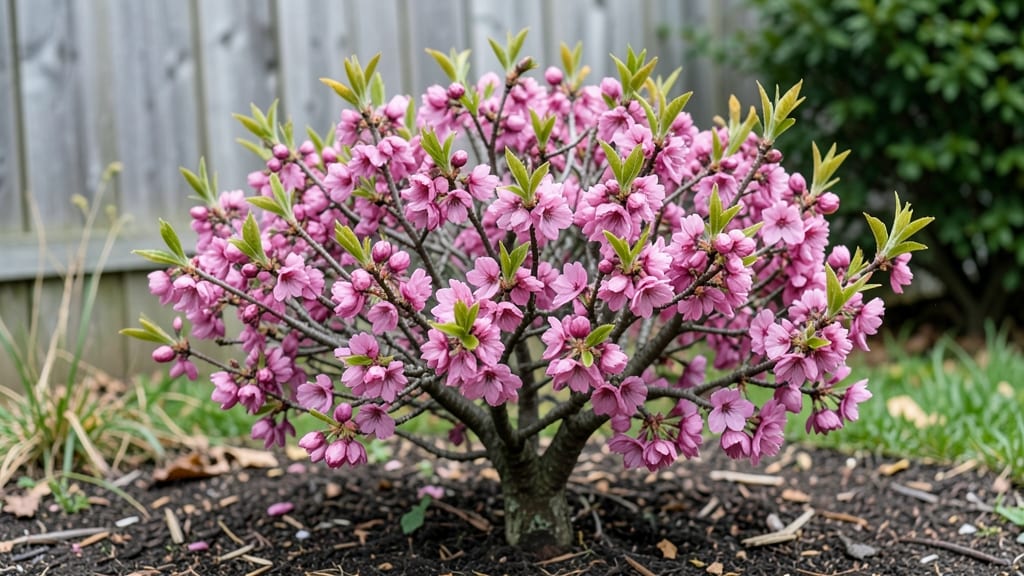
The flowering plum 'Newport' turns Pacific Northwest winters into a riot of color when most gardens are still dormant. 🌸 Its frost-resistant blooms appear weeks before spring bulbs, offering early seasonal drama with minimal fuss.
I’ve watched mine transform a gray February into a burst of pink and white—something my neighbors still comment on years later.
This shrub thrives in small spaces, making it perfect for urban yards or tight garden beds. The Newport variety grows 6-8 feet tall but stays compact enough for foundation plantings or mixed borders.
Its glossy dark green leaves provide year-round structure, while the 3-inch fragrant flowers attract bees and hummingbirds early in the season. The best part? It handles wet winters and dry summers alike, staying healthy with almost no special care.
Plant it near patios or entryways to create an instant focal point, or pair it with dwarf conifers or heuchera for layered texture. The blooms even make stunning cut flowers—just snip a few stems for a vase that lasts a week.
By late spring, the foliage fills in beautifully, giving you four seasons of interest without extra effort.
For best results, choose a spot with morning sun and afternoon shade—this protects the flowers from scorching while keeping the foliage lush. Mulch well in winter to shield roots from freeze-thaw cycles.
The 'Newport' rewards patience with decades of reliable blooms, making it one of the most reliable shrubs for cold climates.
📚 In This Guide
- What you need
- Instructions
- Tips and common mistakes
- Wrapping up and next steps
What you need
- ● Flowering plum tree: 1 mature tree (3-5 years old, 6-10 ft tall) or 1-2 bare-root saplings (for transplanting).
- ● Pro tip: 💡 Look for Prunus mume 'Barely Pink' or 'Snow Fence' varieties—they’re cold-hardy and thrive in Newport’s coastal climate!
- ● Planting site: Full sun (6+ hours/day) or partial shade (4-6 hours).
- ● Well-draining soil (amend with compost if your soil is heavy clay).
- ● Space: 15-20 ft apart for mature trees (or 8-10 ft for dwarf varieties).
- ● Tools: Shovel or trowel (for digging).
- ● Garden gloves (to protect your hands!).
- ● Pruning shears (for shaping or cleanup).
- ● Soil amendments: 5-10 lbs of organic compost or peat moss (to improve drainage).
- ● Slow-release 10-10-10 fertilizer (1 lb per tree, applied in early spring).
- ● Mulch: 2-3 inches of wood chips or pine straw (to retain moisture and suppress weeds).
- ● Watering supplies: Drip irrigation kit or soaker hose (for deep watering).
- ● Pro tip: 🌡️ Newport’s coastal fog can be deceiving—check soil moisture weekly during dry spells!
- ● Pest control: Neem oil spray (for aphids or scale insects).
- ● Bird netting (to protect blooms if squirrels or birds are pesky!).
Step-by-Step guide to planting and caring for flowering plum 'Newport'
This stunning Pacific Northwest native thrives with minimal fuss—here's how to establish it for years of vibrant blooms.
🌱 Step 1: Select the Perfect Planting Site
The 'Newport' flowering plum adores full sun to partial shade, making it ideal for Pacific Northwest gardens where afternoon shade helps prevent leaf scorch. Choose a location with well-draining soil—this tree hates soggy roots—and at least 15 feet of clearance from structures or other plants, as mature specimens reach 15-20 feet tall.
I always test drainage by digging a 12-inch deep hole and filling it with water. If it drains completely within 2-3 hours, the site is perfect. Amend heavy clay soil with 3 inches of compost mixed into the top 12 inches of native soil to improve aeration without altering the natural acidity the tree prefers.
🪴 Step 2: Plant at the Right Time and Depth
Fall planting—4-6 weeks before your first frost—gives roots time to establish before winter. If planting in spring, do it as early as possible, while soil is still workable but not frozen. Dig a hole twice as wide as the root ball but no deeper—planting too deep suffocates the tree and causes trunk rot.
Loosen the root ball gently if roots are circling, then position the tree so the top of the root ball sits 1-2 inches above ground level. Backfill with native soil mixed with 1 part compost to improve fertility. Water deeply until soil settles, then add more soil if needed to maintain that 1-2 inch elevation—this prevents water from pooling around the trunk.
☀️ Step 3: Water Deeply and Mulch Properly
After planting, water deeply—10-15 gallons for mature trees—to encourage root expansion. For newly planted specimens, water once weekly during the first growing season, providing 1-2 gallons per inch of trunk diameter. You'll know you're watering correctly when soil 6 inches down feels moist but not saturated.
Apply 3-4 inches of organic mulch (like wood chips or bark) in a 3-foot diameter circle around the tree, keeping mulch 6 inches away from the trunk. This conserves moisture, regulates soil temperature, and suppresses weeds—just replace it annually as it breaks down. Never let mulch pile against the trunk, as this invites rot and pests.
✂️ Step 4: Prune for Health and Bloom
Prune Newport' flowering plums in late winter or early spring, just as buds begin to swell but before new growth starts. Remove dead, diseased, or crossing branches first, then thin out 10-20% of the canopy to improve airflow and light penetration. Cut just outside the branch collar to prevent tears and promote faster healing.
Never prune in fall—this encourages new growth that won't harden off before winter, leaving branches vulnerable to frost damage. After pruning, apply a copper fungicide spray to any open wounds to prevent bacterial infections. The goal is to maintain an open, vase-like shape that showcases those stunning spring blooms while keeping the tree structurally sound.
🌿 Step 5: Fertilize and Monitor for Pests
Young trees benefit from a balanced 10-10-10 fertilizer applied in early spring, using ½ pound per inch of trunk diameter. Scatter granules evenly in the mulch ring and water deeply to activate them. Mature trees rarely need fertilizer—Newport' thrives in lean soil—but you'll know it's hungry if new growth appears yellow or stunted.
Watch for aphids or scale insects on new shoots, which can sap energy from blooms. A strong blast of water usually dislodges them, but for persistent infestations, use neem oil or horticultural soap applied in early morning to avoid harming pollinators. Healthy 'Newport' trees rarely have pest issues, so focus on proper watering and mulching to build resilience.
Tips & tricks for perfect flowering plum Newport planting
These essential tips will help you establish your 'Newport' flowering plum for decades of spectacular blooms and pollinator support.
Drainage Test: The 2-3 hour drainage test in Step 1 is non-negotiable for this tree. I've seen 'Newport' plums fail spectacularly in soggy soil—roots need oxygen to thrive. If your soil drains slower, consider planting on a mound or adding coarse sand to the bottom of the hole to create better drainage channels. This is especially critical in Pacific Northwest's rainy climate where waterlogging is common.
Root Ball Elevation: Positioning the root ball 1-2 inches above ground level in Step 2 prevents water pooling around the trunk, which is a silent killer of these trees. I've noticed that gardeners often overlook this subtle elevation, leading to trunk rot over time. Use a level to ensure proper positioning—this small detail makes all the difference in long-term health.
Watering Wisdom: The once-weekly watering guideline in Step 3 is perfect for most Pacific Northwest conditions, but adjust based on your microclimate. In hotter inland areas, you might need watering twice weekly during summer. Always check soil moisture 6 inches down—if it's bone dry, it's time to water. Overwatering is just as damaging as underwatering for this drought-tolerant native.
Pruning Precision: When thinning 10-20% of the canopy in Step 4, focus on removing branches that cross or rub against each other. These "hidden wounds" create entry points for diseases. I've found that a sharp pair of pruners and a clean cut just outside the branch collar prevents tears and promotes faster healing. This careful approach maintains that beautiful vase shape while maximizing bloom potential.
Pro Tips for Flowering Plum Newport
- These essential tips will help you establish your 'Newport' flowering plum for decades of spectacular blooms and pollinator support.
- Drainage Test: The 2-3 hour drainage test in Step 1 is non-negotiable for this tree.
- Root Ball Elevation: Positioning the root ball 1-2 inches above ground level in Step 2 prevents water pooling around the trunk, which is a silent killer of these trees.
Frequently asked questions
Got questions about your Flowering Plum Newport? You’re not alone!
Here are some of the most common queries from gardeners in the Pacific Northwest—and beyond. Whether you’re a first-time grower or a seasoned pro, these answers will help you nurture this stunning frost-resistant shrub like a pro.
How cold can Flowering Plum Newport tolerate?
The Flowering Plum Newport is a true Pacific Northwest champion, thriving in USDA Zones 5-8. It handles down to -20°F (-29°C) with ease, making it perfect for early spring blooms before frost risks return. Just ensure it’s planted in well-drained soil to avoid root rot in waterlogged winters.
When is the best time to plant Flowering Plum Newport?
For optimal growth, plant your Flowering Plum Newport in early spring or fall. This gives roots time to establish before summer heat or winter frost. Avoid planting in mid-summer, as high temperatures can stress young shrubs. If you’re in a cooler microclimate (like coastal PNW), fall planting is ideal!
Why aren’t my Flowering Plum blooms as vibrant as expected?
Dull or sparse blooms often signal nutrient deficiencies (especially phosphorus for flowers) or over-fertilizing with nitrogen, which promotes leafy growth over blooms. Prune spent flowers in early spring to encourage new growth, and use a balanced 10-10-10 fertilizer in late winter. Too much shade? Relocate to 6+ hours of sunlight for showstopping color!
Can I prune Flowering Plum Newport after it blooms?
Yes! Unlike some spring bloomers, Flowering Plum Newport blooms on new wood, so you can prune after flowering (late spring to early summer) to shape the shrub. Remove dead, crossing, or overcrowded branches first, then thin out 1/3 of the oldest stems at the base to encourage fresh growth. Avoid heavy pruning in fall—it may stimulate tender new growth vulnerable to frost.
Is Flowering Plum Newport good for pollinators?
Absolutely!
This shrub is a pollinator magnet, attracting bees, butterflies, and hummingbirds with its early spring blooms (often before many other plants emerge). For extra pollinator power, pair it with native companions like Pacific Dogwood or Salal. Avoid pesticides during bloom time to keep these beneficial visitors happy!
Wrapping up and next steps
The flowering plum Newport isn’t just a stunning addition to your Pacific Northwest garden—it’s a low-maintenance, frost-resistant pollinator magnet that thrives where others falter. With its vibrant blooms, resilience, and year-round interest, this shrub proves that beauty and hardiness go hand in hand. 🌸
Ready to transform your outdoor space? Start by selecting a sunny spot (or dappled shade) and plant your Newport in well-draining soil.
Whether you’re a seasoned gardener or a beginner, this shrub makes it easy to grow a garden that’s as tough as it is beautiful. Grab your gloves and get planting!