
Shrubs
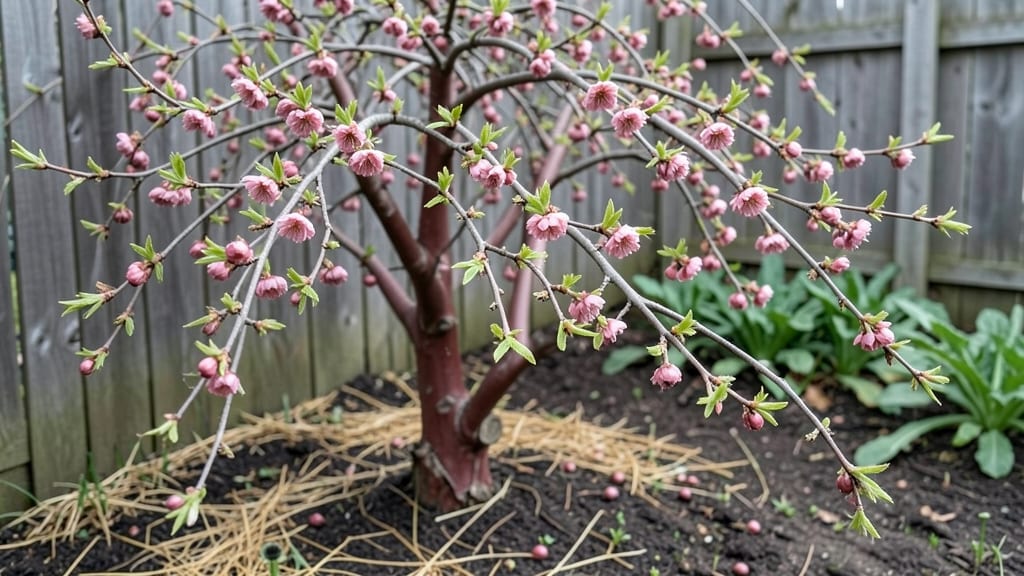
This crimson cascade weeping flowering peach isn’t just another pretty shrub—it’s the Pacific Northwest’s secret weapon for year-round drama. 🌸 I planted mine last spring, and by summer, its branches were spilling pink blossoms like a waterfall, even after our chilly nights.
The key? Understanding its cold-hardy quirks and pruning it just right—too aggressive, and you lose those cascading blooms; too gentle, and it gets leggy.
The real magic happens in well-drained soil mixed with compost, and a spot where it gets 6+ hours of sun (morning light is ideal). In containers, use a 15-gallon pot with drainage holes—my urban neighbors swear by this for small spaces.
Water deeply once a week, but let the top inch dry out between soakings. The trick to keeping it thriving through our damp winters? Mulch heavily and prune after the first flush of blooms in early summer.
By autumn, you’ll have a vibrant, disease-resistant shrub with glossy leaves that turn fiery red before dropping. The peaches? Tiny and tart, but the showstopper is the cascading habit—perfect for framing patios or draping over arbors.
Even in Zone 7’s cold snaps, this one stays stunning, and the pruning blueprint I’ll share keeps it looking effortless. Let’s get those shears ready!
Works equally well in in-ground beds or containers, and adapts to urban courtyards or rural landscapes. The only rule? Prune smart—this isn’t your average shrub. Here’s how to make it your garden’s star.
📚 In This Guide
- What you need
- Instructions
- Tips and common mistakes
- Wrapping up and next steps
What you need
- ● Pruning shears – Bypass pruners (sharp, 6-8 inch blades) for clean cuts. Loppers (for thicker branches, 18-24 inch handles).
- ● Pruning saw – Folding pruning saw for branches thicker than 1.5 inches.
- ● Disinfectant – 70% isopropyl alcohol or bleach solution (1 part bleach : 9 parts water) to sterilize tools.
- ● Gloves – Heavy-duty gardening gloves (cut-resistant for thorns).
- ○ Sealing wax or pruning paste – Optional but recommended for large cuts to prevent disease.
- ● Ladder or step stool – If your tree exceeds 6 feet in height.
- ● Trash bags or bucket – For collecting pruned branches.
- ● Handheld leaf blower – Clears debris from the work area post-pruning.
- ● Pruning paint – Copper-based to seal cuts and deter borers.
- ● Notebook & pen – Sketch your tree’s structure before pruning for reference.
- ● Fertilizer (balanced, 10-10-10) – Apply post-pruning to boost recovery.
Step-by-Step instructions for pruning Crimson Cascade weeping flowering peach
This is the pruning method I’ve used for years to keep my Crimson Cascade thriving in PNW winters—where cold snaps and wet springs test even the hardiest trees.
✂️ Step 1: Prune in Late Winter Before Bud Break
Timing is everything with this peach variety. Wait until late winter when the tree is still dormant but just before buds begin swelling—typically mid-to-late February in the Pacific Northwest. Cold snaps can delay this, so check daily for bud swelling. Prune too early, and you risk exposing fresh cuts to harsh winter winds; too late, and you’ll remove next year’s flower buds.
Start by removing any dead, crossing, or diseased branches first. These are easy to spot—they’ll be brittle, discolored, or growing inward. Use sharp bypass pruners to make clean cuts just outside the branch collar (the swollen area where the branch meets the trunk). Never leave stubs, as they invite rot and pests. I like to sanitize my tools between cuts with rubbing alcohol to prevent spreading any latent diseases.
🌿 Step 2: Thin the Canopy for Air Circulation
The weeping habit of Crimson Cascade means branches grow long and sprawling, which can lead to dense foliage if left unchecked. Your goal is to open the center of the tree to at least 6-8 inches of space between branches. This prevents fungal diseases like peach leaf curl, which thrives in damp, crowded conditions—a common issue in PNW’s wet springs.
Focus on removing branches that grow straight up or inward. These compete for sunlight and nutrients, weakening the tree’s structure. Aim to create an open vase shape that lets light and air reach the center. If a branch is too thick to cut entirely, make a 3-branch cut—where three branches grow from the same point—by removing the smallest one at its base. This redirects energy to stronger growth.
☀️ Step 3: Shape for Winter Sun Exposure
PNW winters demand extra care for flowering peaches, which need full winter sun to harden off properly. After thinning, shape the tree to maximize winter sunlight exposure. Trim the outer edges to encourage a rounded, weeping form while keeping the center open. Avoid heavy pruning on the lower branches—these should remain intact to protect the trunk from cold winds.
Pay special attention to water sprouts—fast-growing, vertical shoots that pop up after pruning. These sap energy from the tree and should be removed entirely at their base. If you see any suckers growing from the base, cut them off immediately. These compete with the main tree and can weaken its root system. After shaping, step back and visualize the tree in winter—you want it to look balanced and able to shed snow without breaking.
🪴 Step 4: Post-Pruning Care for Cold Resistance
Once pruning is complete, apply a dormant oil spray (like horticultural oil) to protect the tree from overwintering pests like scale and mites. This is especially critical in the PNW, where mild winters can keep pests active. Follow up with a 2-inch layer of mulch around the base, keeping it 6 inches away from the trunk to prevent rot. Use bark mulch or wood chips—avoid fresh wood chips, as they can draw moisture and harm the tree.
Water deeply but sparingly after pruning—just enough to settle the soil around the roots. Overwatering now can stress the tree before it’s ready for spring growth. If your area experiences late frosts, consider wrapping the trunk with tree wrap to protect it from sunscald, which can occur when cold nights give way to warm days. Monitor the tree closely in early spring for signs of bud break, which signals it’s time to step back and let nature take over.
Tips & tricks for pruning Crimson Cascade weeping flowering peach
Pruning this stunning PNW peach variety takes precision—here's how to avoid common pitfalls while maximizing your tree's cold resistance and future bloom potential.
Timing is Everything: In Step 1, don't rush the late winter timing. I've seen bud swelling begin as early as mid-February in sheltered microclimates, but wait until you see consistent daytime temperatures above 45°F. Use a small magnifying glass to check for tiny pink buds—this is your cue. Cold snaps can delay bud break, so monitor daily. The goal is to prune just before buds swell, not after they've started growing.
Tool Technique: For Step 1 and Step 2, invest in quality bypass pruners—they make cleaner cuts than anvil pruners, which can crush branches. I always sanitize my tools between cuts using 70% rubbing alcohol, especially when dealing with diseased branches. Pro tip: Wipe down tools after each tree to prevent cross-contamination. For thicker branches over 1/2 inch, use a pruning saw with a fine-tooth blade to avoid tearing the bark.
Visualizing the Canopy: In Step 2, create a mental "light tunnel" through your tree's center. Step back frequently and imagine sunlight streaming through—this helps achieve the 6-8 inch spacing between branches. For the 3-branch cut technique, remove the smallest branch first, then the next smallest, leaving the strongest branch intact. This redirects energy to the healthiest growth while maintaining the tree's natural weeping shape.
Winter Sun Strategy: When shaping in Step 3, focus on preserving lower branches to act as windbreaks for the trunk. I like to visualize the tree as an umbrella—open in the center to catch sunlight, but with sturdy edges to shed snow. For water sprouts, look for those fast-growing vertical shoots that appear after pruning—they're energy vampires that should be removed entirely at their base.
Pro Tips for Crimson Cascade Weeping Flowering Peach
- Pruning this stunning PNW peach variety takes precision—here's how to avoid common pitfalls while maximizing your tree's cold resistance and future bloom potential.
- Timing is Everything: In Step 1, don't rush the late winter timing.
- Tool Technique: For Step 1 and Step 2, invest in quality bypass pruners—they make cleaner cuts than anvil pruners, which can crush branches.
Frequently asked questions
Got questions about the Crimson Cascade Weeping Flowering Peach? You’re not alone!
Here are some of the most common queries—plus expert answers to help you nurture this stunning PNW shrub like a pro.
How cold-hardy is the Crimson Cascade Weeping Flowering Peach?
The Crimson Cascade thrives in USDA Zones 5-8, making it a perfect fit for the Pacific Northwest’s chilly winters. While young trees may need winter protection (like burlap wraps), established plants handle frost beautifully—just avoid late-spring freezes, which can damage blossoms.
When is the best time to prune for maximum blooms?
Prune late winter or early spring (before buds swell) to shape the tree and encourage vibrant blooms. Avoid heavy pruning in fall—it can stimulate tender new growth that won’t survive winter. Pro tip: Thin out crowded branches first to improve airflow and reduce disease risk.
Why aren’t my Crimson Cascade branches weeping as dramatically?
Weeping growth is genetic, but light, pruning, and sunlight influence it. If branches aren’t cascading, check for:
- Sufficient sunlight: Plant in full sun (6+ hours/day)—shade slows weeping growth.
- Structural pruning: Encourage downward growth by tying branches gently to stakes or trellises.
- Patience: Young trees take 3-5 years to fully develop their weeping habit.
Are there dwarf or low-maintenance alternatives?
If space or upkeep is a concern, consider these Crimson Cascade cousins:
- ‘Bonanza’ Peach: Compact (12–15 ft tall), cold-hardy, and self-pollinating—great for small yards.
- ‘Red Haven’ Peach: Semi-dwarf, disease-resistant, and thornless for easier pruning.
- Nectarine hybrids (e.g., ‘Fantasy’): Fewer thorns, similar blooms, and slightly smaller canopies.
Do I need to hand-pollinate for fruit?
While Crimson Cascade is self-pollinating, planting a second variety nearby (like ‘Bonanza’ or ‘Redhaven’) boosts fruit set and ensures better yields. Bees love the blooms, but wind pollination helps too—just avoid heavy pruning that removes flower buds.
What pests or diseases should I watch for?
Common issues in the PNW include:
- Peach leaf curl: Fungal disease causing puckered, red leaves. Treat with copper fungicide in late fall/winter.
- Aphids/Scale: Sap-sucking pests that distort new growth. Blast off with water or use neem oil.
- Bacterial leaf spot: Brown spots on leaves? Remove infected foliage and improve airflow with pruning.
Wrapping up and next steps
The Crimson Cascade Weeping Flowering Peach is a stunning, cold-hardy gem that rewards gardeners with breathtaking blooms and year-round interest—if you master its pruning secrets. By following the Pacific Northwest’s tailored blueprint, you’ll ensure vibrant growth, robust health, and a showstopping display for seasons to come. 🌸
Ready to transform your garden? Grab your pruners, mark your calendar, and start planning your next pruning session—your Crimson Cascade will thank you with cascades of color! 🌿