
Pruning
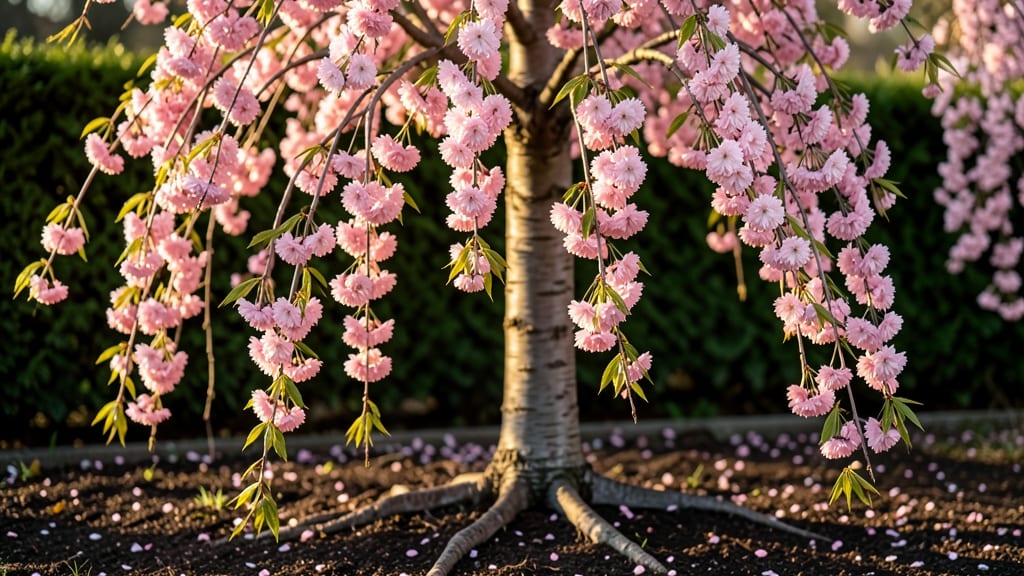
A double flowering weeping cherry tree transforms any Pacific Northwest garden into a living watercolor. Its cascading branches, heavy with pink blossoms, create a dreamy focal point that feels like a secret garden.
I planted mine near the patio last spring, and neighbors now stop just to admire it—no pruning required yet, but I know the real magic happens when we shape it for year-round interest.
The real secret isn’t just the flowers—it’s how this tree changes with the seasons. In spring, the blooms spill like confetti, summer brings lush green foliage, and fall delivers subtle color shifts.
Pair it with dwarf conifers for contrast or hostas at its base for texture, and you’ve got a low-maintenance masterpiece that works in lawns, borders, or even containers. The key? Pruning lightly after blooming to encourage those cascading branches.
What you’ll end up with is a tree that feels like a cherished heirloom—not just another landscape plant. The branches grow gracefully, the flowers attract pollinators, and the overall effect is pure, effortless elegance.
Plus, it’s one of those rare trees that looks as stunning in winter (with its bare, sculptural form) as it does in full bloom.
Whether you’re designing a small urban yard or a sprawling estate, this tree adapts beautifully. The Pacific Northwest’s mild winters mean it thrives with minimal fuss, making it the perfect centerpiece for any outdoor space. Ready to make your garden the envy of the neighborhood?
📚 In This Guide
- What you need
- Instructions
- Tips and common mistakes
- Wrapping up and next steps
What you need
- ● Bypass pruners: Sharp, high-quality pair (e.g., Felco or Fiskars) for clean cuts on branches up to ½ inch thick.
- ● Loppers: For branches ½ to 1½ inches thick—look for ratcheting or bypass styles for precision.
- ● Pruning saw: A curved-tooth saw (like a Japanese-style) for thick branches over 1½ inches.
- ● Disinfectant (70% isopropyl alcohol or bleach solution): 1 part bleach to 9 parts water to sterilize tools between cuts.
- ● Garden gloves: Heavy-duty, cut-resistant gloves (e.g., Mechanix or Wolverine) to protect your hands.
- ● Ladder or step stool: Sturdy, extendable (12–16 ft) for reaching higher branches safely.
- ● Tarp or drop cloth: 10x10 ft to catch debris and protect your lawn.
- ● Twine or zip ties: For temporary support if you’re training new growth.
- ● Hand pruners (for fine-tuning): Anvil-style for smaller trims (under ¼ inch).
- ● Sealant (pruning paint): For large cuts over ½ inch to prevent disease (e.g., Tanglefoot Tree Wound Pruning Seal).
- ● Tree wound dressing: Avoid overuse—only needed for very large wounds.
- ● Notebook & pencil: To sketch your pruning plan or track progress.
- ● Safety glasses: For protection when working with debris.
Instructions for pruning double flowering weeping cherry trees in the Pacific Northwest
This method keeps your tree healthy, encourages abundant blooms, and maintains that graceful weeping form.
Assess Growth Habits and Identify Structural Branches
Start by examining your tree in late winter or early spring, just before new growth begins. Look for the main scaffold branches that create the weeping silhouette—these are your primary structural elements. In the Pacific Northwest’s mild climate, weeping cherries often grow more vigorously, so you’ll need to prune more aggressively to maintain shape.
Focus on removing any branches that grow straight up or cross each other, as these compete with the tree’s natural weeping habit. Use sharp pruning shears to make clean cuts just outside the branch collar—the swollen area where the branch meets the trunk. This ensures faster healing and prevents disease entry points.
Thin Out Excessive Growth for Airflow and Light Penetration
Weeping cherries produce dense foliage, which can block sunlight and airflow—critical issues in the Pacific Northwest’s damp climate. Aim to thin out about 20-30% of the canopy by removing smaller branches from the interior. Start at the bottom and work your way up, cutting back to a lateral branch or bud that faces outward.
Prioritize branches that are rubbing against others or growing inward. These create weak points and invite pests or disease. After thinning, step back and visualize the tree’s shape—you should see light filtering through the branches and an open, airy structure that encourages new growth.
Prune for Flowering and Fruit Production
Double flowering weeping cherries bloom on both old and new wood, so timing matters. In late winter or early spring, before buds swell, remove any dead, diseased, or weak branches. Then, in late summer after the first flush of flowers, lightly prune to shape the tree and encourage next year’s blooms.
Cut back some of the current season’s growth by one-third to promote bushier growth and more flowers. Avoid heavy pruning in late summer, as this can stimulate tender growth that may not harden off before winter. In the Pacific Northwest, where winters are mild but wet, this approach balances bloom production with winter resilience.
Maintain the Weeping Form Through Selective Pruning
To preserve the tree’s elegant weeping habit, focus on pruning the top and sides more heavily than the bottom. This encourages branches to grow downward and outward. Use hand pruners for smaller branches and a pruning saw for thicker limbs, always making cuts at a 45-degree angle just outside the branch collar.
After pruning, apply a thin layer of wound dressing to larger cuts to protect against fungal infections—a common issue in the Pacific Northwest’s humid climate. Water the tree deeply afterward to help it recover. Over time, this selective pruning will reinforce the tree’s natural shape while keeping it vigorous and blooming abundantly.
Tips & tricks for pruning double flowering weeping cherry trees
A few strategic adjustments can make all the difference in keeping your weeping cherry thriving—and blooming spectacularly—year after year.
Timing is Everything: The Pacific Northwest’s mild winters mean you have a slightly extended window for late winter pruning, but don’t push it too late. Aim for just before buds begin to swell—typically between late January and early March. This timing prevents stressing the tree before it’s ready to burst into growth. If you miss this window, you can do a light shaping prune in late summer, but avoid heavy cuts then to prevent tender new growth from being vulnerable to winter cold.
Branch Collar Precision: One of the most critical (and often overlooked) details is making clean cuts just outside the branch collar. The branch collar is that swollen area where the branch meets the trunk, and cutting here ensures the tree can heal properly. If you cut too close to the trunk or flush with it, you create an open wound that invites fungal infections—a common problem in our damp climate. Use sharp pruning shears and make your cuts at a slight angle to help water run off.
Visualizing the Canopy: After thinning, step back and really look at your tree’s shape. In the Pacific Northwest’s often cloudy conditions, weeping cherries can become overly dense, blocking light from reaching the lower branches. Aim to create an open, airy structure where sunlight can filter through to the interior. This not only encourages new growth but also reduces the risk of fungal diseases that thrive in shaded, damp conditions. Think of it as creating a "sunlight highway" through your tree’s branches.
Wound Dressing Wisdom: While some gardeners debate the necessity of wound dressing, I’ve found it particularly valuable in our region’s humid climate. After making larger cuts, apply a thin layer of wound dressing to protect the exposed areas. This simple step can prevent fungal infections that are more likely to take hold in the Pacific Northwest’s damp air. Just be sure to use it sparingly—too much can smother the healing process.
Pro Tips for Double Flowering Weeping Cherry Tree
- A few strategic adjustments can make all the difference in keeping your weeping cherry thriving—and blooming spectacularly—year after year.
- Timing is Everything: The Pacific Northwest’s mild winters mean you have a slightly extended window for late winter pruning, but don’t push it too late.
- Branch Collar Precision: One of the most critical (and often overlooked) details is making clean cuts just outside the branch collar.
Frequently asked questions
When is the best time to prune a double flowering weeping cherry tree?
Prune your tree late winter to early spring (February–March), just before buds swell but before new growth starts. Avoid heavy pruning in fall or summer, as it can stress the tree and reduce next year’s blooms. Light shaping in late spring (after flowering) is fine, but keep it minimal to preserve the weeping form.
Can I prune a weeping cherry tree after it blooms?
Yes, but only lightly! After the flowers fade (late spring), you can trim dead or crossing branches to maintain its shape. Avoid heavy pruning now—it removes next year’s flower buds, which form on old wood. Think of it as a touch-up, not a full makeover.
Why isn’t my double flowering weeping cherry tree blooming as much as it should?
Several factors could be at play: over-pruning (especially in summer/fall), poor sunlight (they need full sun!), or nutrient deficiencies. Check for thinning canopies or dead branches—these can signal stress. Boost blooms with a balanced fertilizer in early spring and ensure it gets 6+ hours of sunlight daily.
Are there any alternatives to double flowering weeping cherry trees?
If you love the weeping habit but want variety, consider:
- Kwanzan Cherry (Prunus serrulata ‘Kwanzan’): Upright with double pink blooms and great disease resistance.
- Weeping Higan Cherry (Prunus subhirtella ‘Pendula’): Early bloomer with single white flowers and cold hardiness.
- Weeping Smokebush (Cotinus obovatus ‘Royal Purple’): Purple foliage and smoky plumes for year-round interest.
How do I prevent pests or diseases in my weeping cherry tree?
Weeping cherries are prone to fungal issues (like powdery mildew) and pests (aphids, borers). Prevent problems with these tips:
- Water at the base (avoid wetting foliage to reduce fungal spores).
- Prune for airflow—remove dense branches to keep the canopy dry.
- Inspect leaves regularly for yellowing or holes (signs of pests).
- Apply neem oil or horticultural oil in early spring for prevention.
Wrapping up and next steps
Transforming your double flowering weeping cherry tree into a year-round blooming masterpiece is well within reach—especially in the Pacific Northwest’s unique climate! 🌸 With the right tools, timing, and techniques, you’ll enjoy cascading flowers and lush foliage that turns heads (and neighbors green with envy).
Remember, patience and consistency are key: prune in late winter or early spring, prioritize airflow, and never fear a little creativity to shape its graceful weeping form.
Ready to roll up your sleeves? Start by scheduling your first pruning session this winter—your tree (and future spring blooms) will thank you! For extra inspiration, snap photos of your progress or join local gardening groups to swap tips. Happy pruning—your tree’s next chapter is waiting! ✂️🌿