Flowers
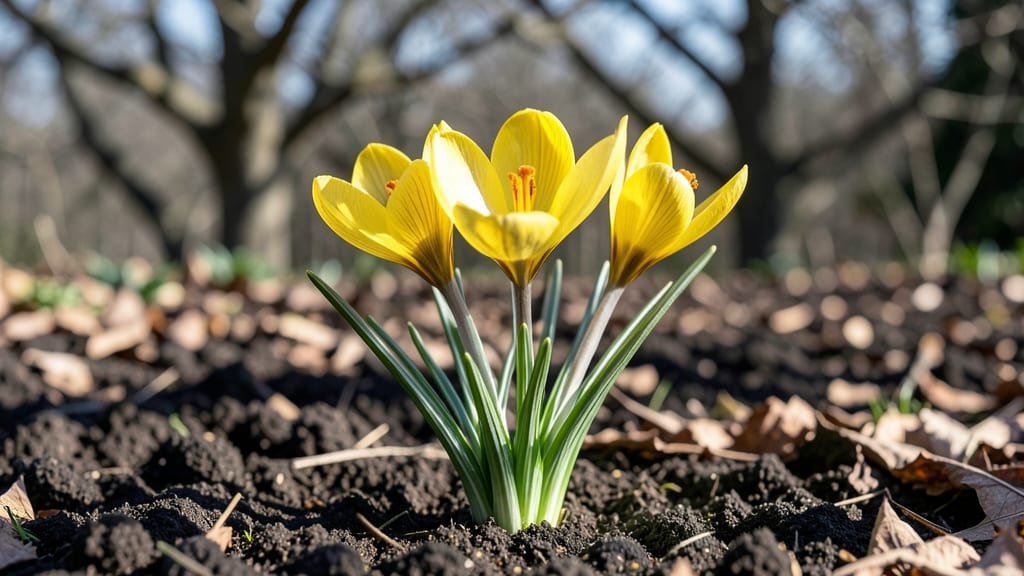
Growing yellow saffron flowers—those bright, cheerful crocuses—means 60 days of golden blooms that outshine even the boldest tulips. 🌱 I’ve planted these sun-kissed beauties in my garden for years, and they’re the first splash of color after winter’s gray.
The trick isn’t just dropping bulbs in the ground; it’s timing the planting so they burst through frost-kissed soil just as daffodils start to nod.
These aren’t the saffron you sprinkle on paella—they’re pure ornamental magic, with petals that glow like buttercups in late winter or early spring. Plant them in full sun with well-draining soil, and you’ll get clusters of cheerful faces that naturalize beautifully over time.
Pair them with grape hyacinths or hellebores for a spring carpet no one will believe you grew yourself.
📚 In This Guide
- What you need
- Instructions
- Tips and common mistakes
- Wrapping up and next steps
What you need
- ● Yellow Saffron Corms: 5–10 bulbs (choose healthy, firm corms with no soft spots).
- ● Well-Draining Potting Mix: 2–3 gallons (use a blend of cactus/succulent soil + perlite or sand for aeration).
- ● Pot or Garden Bed: Container: 12–16" diameter pot with drainage holes (terracotta recommended).
- ● Garden: Full sun spot (6+ hours/day) with loose, rocky soil (amend with compost if needed).
- ● Fertilizer: Balanced granular fertilizer (10-10-10) or slow-release bulb food.
- ● Watering Can or Hose: With a gentle spray nozzle (avoid overhead watering).
- ○ Garden Gloves: Optional but helpful for handling corms.
- ● Soil Thermometer: To monitor warmth (ideal: 60–70°F for planting).
- ● Mulch: Gravel or pebbles to retain heat and deter weeds.
- ● Pruning Shears: For trimming spent blooms to encourage regrowth.
- ● Grow Lights: If starting indoors (LED full-spectrum bulbs work best).
Step-by-Step instructions for cultivating golden saffron flowers
Here’s how I grow vibrant yellow saffron flowers—no shortcuts, just reliable techniques for a stunning harvest.
🌱 Step 1: Select and Prepare the Right Soil Mix
Yellow saffron (Crocus sativus) thrives in well-draining, fertile soil with a pH between 6.0 and 7.5. I mix equal parts garden soil, compost, and coarse sand to ensure aeration while retaining moisture. Avoid heavy clay—it suffocates roots and causes rot. Test your soil’s drainage by squeezing a handful: if it stays clumped, add more sand or perlite.
Saffron corms are sensitive to waterlogging, so I always pre-moisten the mix until it’s damp but not soggy. Spread a 2-inch layer of the blend into your container or garden bed, then lightly press it down to create a firm base. This prevents corms from sinking too deep when planted.
☀️ Step 2: Plant Corms at the Correct Depth and Spacing
Plant saffron corms 3-4 inches deep—any shallower and they’ll struggle to establish roots, while deeper planting delays flowering. Space them 4-6 inches apart in rows, with 12 inches between rows for airflow. I use a dibber or pencil to create holes just wide enough to fit each corm snugly.
Place corms pointy side up—this is where the flower will emerge. Cover them with soil, then water gently to settle it around the corms. Avoid overwatering now; saffron corms rot easily if saturated. Instead, keep the soil lightly moist until sprouts appear in 3-4 weeks—that’s your cue to adjust watering.
💧 Step 3: Manage Water and Light for Optimal Growth
Once sprouts emerge, water once a week unless rainfall provides 1 inch or more. Yellow saffron needs full sun (6+ hours daily) to develop vibrant blooms, but in hot climates, afternoon shade prevents wilting. I position my containers where they get morning sun and partial shade by midday—this balances heat and hydration.
Watch for yellowing leaves—this signals either overwatering or nutrient deficiency. If the soil feels damp to the touch, hold off on watering. For extra vigor, I side-dress with a balanced 10-10-10 fertilizer (1 tablespoon per plant) 6 weeks after planting. This boosts root and flower development without burning tender foliage.
⏰ Step 4: Time Harvesting for Peak Saffron Quality
Harvest begins 60 days after planting, when three-quarters of the blooms open in the morning. Use clean scissors to snip the entire flower stem just above the base—this prevents damage to the corm. Handle stems carefully; saffron stigmas are delicate and bruise easily.
To extract the saffron, remove the three deep red stigmas from each flower (they’re the prized part). Lay them on a paper towel to dry in a warm, dark place for 2-3 days, stirring occasionally. Once brittle, store them in an airtight container away from light. Properly dried saffron keeps for up to a year—but it’s best used fresh for maximum flavor and color.
🪴 Step 5: Overwinter Corms for Next Year’s Harvest
After flowering, the foliage will yellow and die back. Do not cut it—the leaves feed the corm until it fully matures. Once brown and crisp, reduce watering to once every 2-3 weeks until the soil freezes. In colder climates, mulch with 2 inches of straw to insulate corms through winter.
In spring, when new shoots appear (usually late winter), remove the mulch and resume regular watering. This cycle ensures your corms multiply yearly, giving you more blooms and saffron each season. I’ve kept my saffron patch thriving for five years using this method—patience pays off with golden rewards.
Tips & tricks for perfect yellow saffron flower cultivation
Growing vibrant yellow saffron flowers takes precision, but these pro tips will help you avoid common pitfalls and maximize your golden harvest.
Soil Preparation Secret: The 2-inch layer of soil mix in Step 1 should be fluffy but not airy—think "damp sponge" texture. I press it down firmly with my hands to create a stable base that prevents corms from sinking deeper than 3-4 inches during planting. This stability is crucial because saffron corms are sensitive to depth changes that can disrupt root development. For containers, use a mix that's 60% soil, 20% compost, and 20% coarse sand by volume—this ratio balances drainage while retaining enough moisture.
Planting Precision: When creating planting holes in Step 2, I use a dibber to make them just wide enough for each corm—about 1 inch in diameter. The key is creating a snug fit so the corm stays upright during the initial watering. If holes are too wide, corms can shift and grow unevenly. For large batches, I mark planting rows with a garden hose laid out in straight lines before digging—this ensures the 4-6 inch spacing stays consistent throughout your garden bed.
Watering Wisdom: The "once a week" guideline in Step 3 assumes average rainfall conditions. In my experience, saffron plants actually prefer slightly drier conditions than most flowers. I test soil moisture by pushing my finger 2 inches into the soil—if it feels damp but not wet, I hold off on watering. For containers, I use a moisture meter to avoid overwatering, which is the #1 cause of corm rot. The 6-week fertilizer timing is perfect because it aligns with when the plants are establishing their root systems for the flowering phase.
Harvesting Technique: The 60-day mark in Step 4 is your target, but don't harvest too early—wait until at least 75% of blooms are open to ensure maximum saffron yield. I harvest in the early morning when stigmas are fully extended but still pliable. For drying, I use a small fan on low setting to gently circulate air around the stigmas on paper towels—this speeds drying from 2-3 days to about 12 hours while preventing mold. Store dried saffron in glass containers with tight lids to preserve its aromatic oils for up to a year.
Pro Tips for Yellow Saffron Flower
- Growing vibrant yellow saffron flowers takes precision, but these pro tips will help you avoid common pitfalls and ma...
- Soil Preparation Secret: The 2-inch layer of soil mix in Step 1 should be fluffy but not airy—think "damp sponge" tex...
- Planting Precision: When creating planting holes in Step 2, I use a dibber to make them just wide enough for each cor...
Frequently asked questions
Got questions about growing yellow saffron flowers? You’re not alone! Here are answers to the most common queries to help you cultivate a stunning golden harvest with ease.
How long does it take for yellow saffron flowers to bloom?
With proper care, Crocus sativus (the true saffron flower) typically blooms in 60–90 days after planting. However, yellow saffron varieties (like Crocus vernus) may bloom earlier—sometimes in 4–6 weeks—depending on climate and soil conditions. Plant in early fall for spring blooms!
How often should I water yellow saffron flowers?
Yellow saffron flowers are drought-tolerant once established! Water deeply but infrequently—about once every 2–3 weeks—unless your region experiences extreme heat. Overwatering can rot bulbs, so ensure well-draining soil. Pro tip: Reduce watering in winter unless soil is bone-dry.
Can I grow yellow saffron in containers?
Yellow saffron thrives in containers with drainage holes, making it perfect for patios or balconies. Use a well-draining potting mix and plant bulbs 3–4 inches deep. Choose pots at least 8–10 inches wide for 3–5 bulbs. Place in full sun (6+ hours/day) for best results.
Do yellow saffron flowers survive winter?
Yes! These hardy flowers are perennial in USDA zones 3–8. In colder climates, mulch bulbs with 2–3 inches of straw or leaves after the first frost. In warmer zones, they may go dormant in summer—reduce watering and provide partial shade until fall replanting.
Why aren’t my yellow saffron flowers blooming?
Blooming issues often stem from light, depth, or dormancy. Check these fixes:
- Sunlight: Ensure 6+ hours of full sun daily.
- Planting depth: Bulbs should be 6 inches deep in well-draining soil.
- Dormancy: Some varieties need a cool winter to trigger blooms.
- Fertilizer: Add low-nitrogen bulb fertilizer in early spring.
Wrapping up and next steps
The yellow saffron flower isn’t just a stunning addition to your garden—it’s a rewarding journey of patience and care that pays off with vibrant blooms in just 60 days! 🌻 With the right soil, sunlight, and a little TLC, you’ll be harvesting golden beauty to brighten up spaces or even craft natural dyes.
Whether you’re a seasoned gardener or a beginner, this guide makes it simple to grow your own.
Ready to dive in? Start with a small batch—plant those seeds or bulbs this weekend and watch your garden transform! Share your progress with fellow plant lovers or experiment with creative uses for your harvest. Happy growing! 🌱✨