Planting
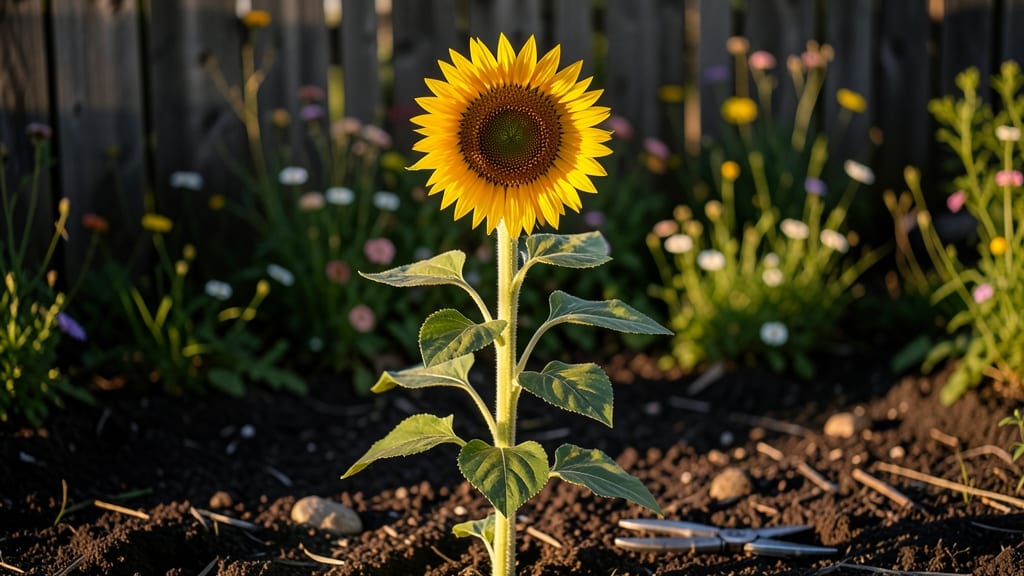
Sunflower plant care starts with the right soil and a sunny spot—because these giants won’t tolerate shade or soggy roots. I learned that the hard way after my first batch flopped in partial sun, leaving me with sad, spindly stems.
The key is well-draining soil mixed with compost, planted where they’ll get at least 6-8 hours of direct sunlight daily. Giant varieties need 12-18 inches of space between seeds, while dwarf sunflowers can huddle closer—6-12 inches apart—making them perfect for small gardens or containers.
Watering feels counterintuitive at first: deep but infrequent is the rule. Stick your finger an inch into the soil—if it’s dry, water thoroughly until moisture reaches 6 inches down. Overwatering leads to weak stems that flop like overcooked noodles, while underwatering stunts growth.
Mulch helps retain moisture and keeps roots cool, which is especially critical during late summer heatwaves when evaporation spikes.
Feed them lightly with a balanced fertilizer (10-10-10) at planting and again when stems hit 2 feet tall, but skip heavy nitrogen—it’ll make them grow leaves instead of those iconic blooms.
Pruning might sound scary, but it’s all about removing the lower leaves to prevent disease and encourage strong stems. Snip off any side buds on giant varieties to direct energy upward—this is how you get those 10-foot monsters instead of bushy disappointments.
Dwarf sunflowers, though, love their side buds for extra blooms, so leave those alone. Watch for spider mites or powdery mildew (common in humid summers) and blast plants with water or use neem oil at the first sign of trouble.
With the right care, you’ll go from seed to sunflower-topped towers in as little as 8-12 weeks—and trust me, your neighbors will notice.
Seasonal tweaks make all the difference: start seeds indoors 4-6 weeks before your last frost, then transplant when soil hits 55°F. In hot climates, succession planting every 2 weeks ensures nonstop blooms.
And if you’re growing for birdseed, let some flowers go to seed—just leave the stalks standing until they turn brown. The trade-off? A winter buffet for feathered friends and zero wasted effort. Now grab those seeds—your sunflower dreams are about to get real.
📚 In This Guide
- What you need
- Instructions
- Tips and common mistakes
- Wrapping up and next steps
What you need
- ● Sunflower Seeds: Choose Helianthus annuus varieties (e.g., 'Mammoth' or 'Autumn Beauty'). Buy 10–20 seeds for a small patch or 50+ seeds for a full garden bed.
- ● Well-Draining Soil: A mix of 60% topsoil, 30% compost, and 10% perlite/sand (for loose, fertile soil). Test pH—ideal range is 6.0–7.5.
- ● Sunlight Spot: A location with 6–8+ hours of full sun daily (no shade!).
- ● Watering Can or Hose: With a gentle spray nozzle to avoid displacing seeds.
- ● Fertilizer: Balanced 10-10-10 fertilizer (1 tbsp per plant at planting time).
- ● Slow-release organic fertilizer (e.g., 5-5-5) for ongoing growth.
- ● Garden Trowel (for digging holes 1–2 inches deep).
- ● Ruler or Measuring Tape (to space seeds 6–12 inches apart, depending on variety).
- ● Mulch (Straw or Wood Chips): 2–3 inches thick to retain moisture and suppress weeds.
- ● Plant Stakes or Trellis: For tall varieties (e.g., 'Russian Giant'), use 6–8 ft stakes to support stems.
- ● Pruning Shears: To trim dead leaves or encourage bushier growth.
Instructions for cultivating sunflowers from seed to towering height
Here's how I've grown sunflowers that reach their full genetic potential—tall, sturdy, and blooming reliably.
Select the Right Variety and Plant at Proper Depth
Choose a variety suited to your climate—dwarf types like 'Teddy Bear' for containers or giant varieties like 'Russian Giant' for full sun exposure. I always plant seeds directly in the garden after the last frost when soil temperatures reach 55°F or warmer. This prevents seeds from rotting in cold, damp soil.
Use your finger to create planting holes 1 inch deep and 6-12 inches apart, depending on the mature plant size. For giant varieties, space seeds 18-24 inches apart to allow ample room for root development. Drop 2-3 seeds per hole—sunflowers have a high germination rate, and thinning later prevents root disturbance.
Maintain Consistent Moisture and Fertility
Water seeds immediately after planting to settle the soil around them. Keep the soil evenly moist for the first 2-3 weeks—not soggy, but never allowed to dry out completely. You'll see the first true leaves emerge within 7-10 days, signaling successful germination. Once seedlings appear, reduce watering slightly but maintain 1 inch of water per week during dry spells.
Apply a balanced fertilizer (10-10-10) at planting time, then side-dress with low-nitrogen fertilizer (5-10-10) when plants reach 12 inches tall. Sunflowers are heavy feeders, but too much nitrogen produces lush foliage at the expense of flower development. I always use organic options like composted manure for long-term soil health.
Provide Support and Monitor for Pests
Tall varieties like 'Russian Giant' often need staking to prevent toppling in wind or rain. Install 3-4 foot bamboo stakes at planting and loosely tie stems with soft cloth or plant ties as they grow. Avoid tight bindings—sunflower stems need room to thicken naturally. You'll notice stems stiffen and darken as they mature, indicating they're ready to support their own weight.
Watch for common pests like aphids and spider mites, which thrive on tender new growth. I spray affected plants with neem oil solution at the first sign of infestation—this organic treatment disrupts their life cycle without harming beneficial insects. Yellowing leaves or sticky residue on stems are clear signs of an aphid problem.
Prune for Better Bloom Production
Remove any lateral buds that form below the main flower head when plants reach 3-4 feet tall. These side shoots divert energy from the primary bloom. Use clean, sharp pruners to snip buds at their base, and dispose of them immediately to prevent disease spread. You'll see the main stem thicken and develop a stronger, more upright growth habit after this pruning.
Deadhead spent blooms by cutting the stem 6 inches below the flower head once the petals fade. This encourages the plant to produce secondary blooms on some varieties, extending your harvest season. The seed heads will continue developing even after the main flower drops, so don't remove them until you're ready for harvest.
Harvest and Prepare for Storage
Harvest seed heads when the back of the flower turns yellow and the petals begin to droop. Cut stems 12 inches below the flower head and hang them upside down in a dry, well-ventilated area. You'll know they're ready for processing when the seed heads rattle easily when shaken—this indicates the seeds are fully mature and dry.
Remove seeds by rubbing the dried flower head between your hands or using a fork to scrape them out. Store seeds in a cool, dark place in airtight containers for up to 2 years. The remaining stems make excellent bird feeders—simply hang them in your garden for winter wildlife enjoyment.
Tips & tricks for perfect sunflower plant care
Growing sunflowers to their full potential requires attention to detail at every stage—here's what I've learned to ensure those towering beauties thrive.
Soil Temperature Matters: The 55°F soil temperature threshold in Step 1 is critical because sunflower seeds need warmth to germinate properly. I've found that using a soil thermometer for a few days before planting helps confirm you've reached this temperature. If your soil feels cool to the touch, wait a few more days—cold soil can cause seeds to rot rather than sprout. For container growing, place pots in a sunny outdoor location during the day to warm the soil faster.
Planting Depth and Spacing: The 1-inch planting depth in Step 1 might seem shallow, but sunflower seeds need this minimal soil cover to prevent drying out while still allowing easy emergence. When spacing, remember that giant varieties like 'Russian Giant' need that full 18-24 inches between plants—they'll spread their roots extensively. I mark planting locations with small sticks to avoid overcrowding, which leads to weak stems and poor flowering.
Watering Wisdom: Those first 2-3 weeks of even moisture in Step 2 are the most crucial period for young seedlings. I set up a simple drip irrigation system for my sunflower beds during this time to maintain consistent moisture without overwatering. Once seedlings appear, you'll notice their first true leaves emerge within 7-10 days—this is your signal that the roots have established enough to handle slightly reduced watering.
Pruning Strategy: When removing lateral buds at the 3-4 foot mark in Step 4, focus on buds that form below the main flower head. These side shoots might seem harmless, but they divert valuable energy from your primary bloom. I use clean pruners and immediately dispose of the cuttings in a sealed bag to prevent disease spread. The resulting thicker main stem will support that massive flower head without toppling.
Pro Tips for Sunflower Plant Care
- Growing sunflowers to their full potential requires attention to detail at every stage—here's what I've learned to en...
- Soil Temperature Matters: The 55°F soil temperature threshold in Step 1 is critical because sunflower seeds need warm...
- Planting Depth and Spacing: The 1-inch planting depth in Step 1 might seem shallow, but sunflower seeds need this min...
Frequently asked questions
Got questions about keeping your sunflowers happy and healthy? You’re not alone! Here are some of the most common queries—plus quick, actionable answers to help your sunflowers reach their full potential.
How often should I water sunflowers?
Water sunflowers deeply 1–2 times per week, especially during dry spells. Aim for about 1–2 inches of water per week, focusing on the soil around the base—not the leaves. Overwatering can cause root rot, so let the top inch of soil dry out between waterings. Pro tip: Mulch around the base to retain moisture and keep weeds at bay!
How long do sunflowers take to grow from seed?
Sunflowers grow fast! From seed to full bloom, expect 80–120 days, depending on the variety. Dwarf types (like ‘Teddy Bear’) may bloom in as little as 50–60 days, while giant varieties (like ‘Mammoth’) can take 100+ days. Check your seed packet for exact timelines—patience pays off with those stunning blooms!
What are the most common sunflower pests, and how do I prevent them?
Sunflowers often attract aphids, spider mites, and sunflower moths. To prevent pests:
- Neem oil spray (weekly preventative treatment).
- Encourage beneficial insects like ladybugs and lacewings.
- Remove damaged leaves or flowers promptly.
- Use row covers for young plants if pests are rampant.
Can sunflowers grow in partial shade?
Sunflowers love full sun (6+ hours daily) for optimal growth and blooming. In partial shade (<4 hours of sun), they’ll grow taller but may produce smaller, fewer flowers. If shade is unavoidable, choose shade-tolerant varieties like ‘Autumn Beauty’ or ‘ProCut’—but expect less vigor.
Are sunflowers annuals or perennials?
Most sunflowers are annuals, meaning they complete their life cycle in one growing season. However, some varieties (like Helianthus tuberosus, the Jerusalem artichoke) are perennials and will regrow year after year in warm climates. If you’re growing annual sunflowers, save seeds from your healthiest blooms for next year’s garden!
What can I do if my sunflower leaves turn yellow?
Yellow leaves often signal overwatering, nutrient deficiency, or disease. Check these fixes:
- Adjust watering—sunflowers hate soggy roots!
- Fertilize with a balanced 10-10-10 or phosphorus-heavy (5-10-10) formula.
- Inspect for powdery mildew (white fuzzy spots) and treat with baking soda spray (1 tsp baking soda + 1 quart water + drop of soap).
Wrapping up and next steps
Caring for sunflowers is a rewarding journey that brings joy and beauty to your garden! With the right sunflower plant care—sunlight, well-draining soil, and consistent watering—you’ll watch them grow from tiny seeds into towering, cheerful giants.
Whether you’re growing them for their stunning blooms or edible seeds, remember: patience and attention are key.
Now that you’re armed with expert tips, why not plant a few today? Grab your seeds, pick a sunny spot, and let nature do the rest. Happy gardening—your sunflowers (and future pollinators!) will thank you! 🌻✨