
Flowers
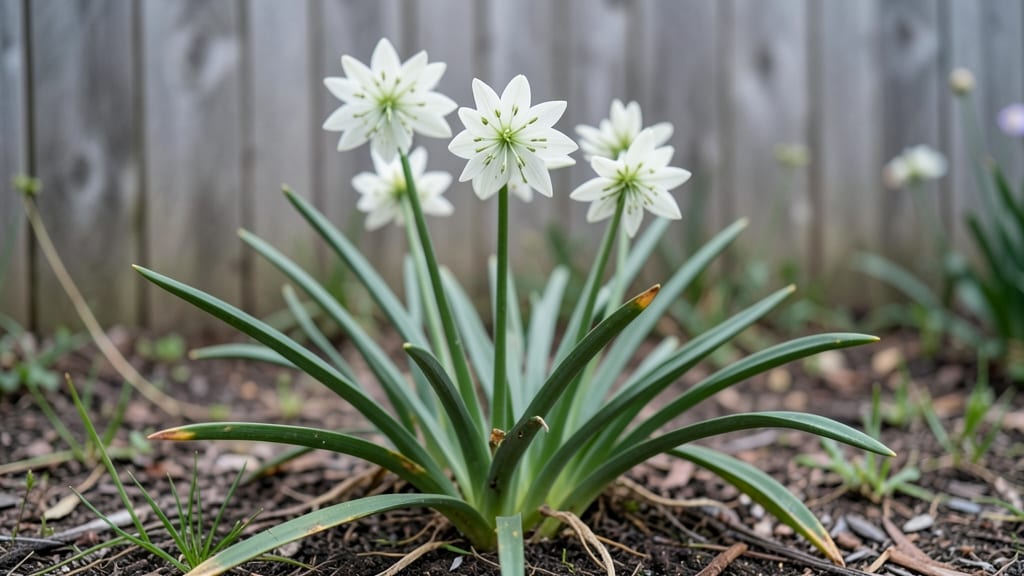
Growing Ornithogalum arabicum—the Star of Bethlehem—means frost-proof blooms that outshine even our drizzly Pacific Northwest springs. 🌱 I’ve watched these star-shaped flowers push through damp soil here, year after year, while neighbors’ tender perennials give up.
The secret lies in its deep roots and timing: plant in fall, and you’ll get that first flush of white stars by April, long before most gardens wake up.
This isn’t a fussy flower. It thrives in partial shade to full sun, tolerates well-draining soil (even rocky spots), and drinks just enough to stay happy—no soggy roots here.
The trick is mimicking its Mediterranean roots: 6-8 weeks of cool weather before blooming signals it’s time to plant bulbs 4-6 inches deep, spaced 3-4 inches apart. Once established, they spread like a living carpet, multiplying every year without fuss.
By late spring, you’ll have clusters of starry white blooms rising above glossy green straps, each lasting 2-3 weeks before giving way to seed pods that add texture through summer.
The best part? No staking, no deadheading—just cut back foliage after blooms fade, and they’ll reward you with next year’s display. Even deer leave these alone.
Perfect for woodland gardens, under trees, or along shady paths where other bulbs struggle. The only real mistake? Planting too late—so get those bulbs in the ground by October at the latest.
Your future self will thank you when those first stars appear while your neighbors are still waiting for daffodils.
📚 In This Guide
- What you need
- Instructions
- Tips and common mistakes
- Wrapping up and next steps
What you need
- ● Star of Bethlehem bulbs: 10–20 bulbs (choose certified disease-free, Ornithogalum umbellatum variety for best results).
- ● Well-draining soil: 1–2 cubic yards of a mix of garden loam (60%), sand (30%), and compost (10%) for optimal aeration.
- ● Organic fertilizer: 5–10 lbs of 5-10-10 or balanced (10-10-10) granular fertilizer (low in nitrogen to avoid leafy growth over blooms).
- ● Mulch: 1–2 bags of pine bark or straw mulch (2–3 inches thick) to protect roots in winter.
- ● Garden trowel or bulb planter (for digging holes 4–6 inches deep).
- ● Garden fork or spade (for loosening soil).
- ● Rake (to level the planting area).
- ● Watering can or hose with a gentle spray nozzle (to avoid displacing bulbs).
- ○ Garden gloves (optional but recommended for comfort).
- ● Soil pH test kit (ideal pH: 6.0–7.0; amend with lime or sulfur if needed).
- ● Slow-release fertilizer spikes (for convenience).
- ● Drip irrigation system (to automate watering in dry spells).
- ● Plant markers (to track bulb locations).
Step-by-step instructions for planting Star of Bethlehem in the Pacific Northwest
Here's the foolproof method I use to establish these frost-hardy beauties in our rainy climate.
🌱 Step 1: Select the Perfect Planting Site and Timing
Star of Bethlehem (Ornithogalum umbellatum) thrives in partial shade to full sun but tolerates morning sun and afternoon shade—ideal for Pacific Northwest gardens. Choose a location with well-draining soil (they hate soggy roots) and shelter from strong winds that can damage their delicate foliage. I always plant mine near established shrubs where they get filtered light.
Timing is critical: plant bare-root tubers in early fall (September-October) or potted plants in early spring (March-April). Fall planting gives roots time to establish before winter, while spring planting avoids frost damage to new growth. If you must plant in late spring, water deeply immediately after planting to help roots establish before summer heat arrives.
🪴 Step 2: Prepare the Soil and Plant the Tubers
Amend the soil with 2-3 inches of compost mixed into the top 6 inches of soil to improve drainage and fertility. Star of Bethlehem prefers slightly alkaline to neutral soil (pH 6.0-7.5). If your soil is acidic, add a handful of garden lime per planting hole and mix thoroughly. The tubers should be planted 2-3 inches deep and 4-6 inches apart in rows spaced 12 inches apart—this spacing allows for natural expansion and prevents overcrowding.
Place each tuber with the pointed end facing upward (this is where the shoot will emerge). If planting in fall, cover the bed with 2-3 inches of mulch (like shredded bark or straw) to protect tubers from winter temperature swings. In spring, remove the mulch once new growth appears to prevent rot.
☀️ Step 3: Water and Maintain Through Establishment
Water deeply but infrequently—aim for 1 inch of water per week, delivered directly to the soil (not the leaves). Star of Bethlehem is drought-tolerant once established, but young plants need consistent moisture. You’ll know you’re watering correctly when the top inch of soil feels dry to the touch between waterings. Overwatering causes tuber rot, so always check drainage before heavy rains.
Fertilize lightly in early spring with a balanced, slow-release fertilizer (10-10-10) applied at half strength. Avoid high-nitrogen fertilizers—they encourage leafy growth at the expense of blooms. I also add a handful of bone meal at planting time to encourage strong root development and future flowering.
✂️ Step 4: Prune and Divide for Long-Term Health
After flowering, cut back the foliage by one-third once it turns yellow to redirect energy to the tubers. This prevents the plant from becoming leggy and ensures stronger growth next season. Star of Bethlehem is perennial but benefits from division every 3-4 years to prevent overcrowding. Dig up clumps in early fall or spring, separate the tubers gently, and replant the healthiest sections.
Watch for yellowing leaves or mushy tubers—these are signs of overwatering or fungal issues. If you see white mold on the soil surface, reduce watering immediately and improve airflow by thinning nearby plants. In the Pacific Northwest’s damp climate, good airflow is your best defense against rot and mildew.
Tips & tricks for perfect Star of Bethlehem planting in the Pacific Northwest
These plant-specific insights will help you establish thriving Star of Bethlehem that thrives through our region's unique climate challenges.
Site Selection Strategy: Look for locations where morning sun warms the soil but afternoon shade protects from our intense summer heat. I've found that planting near the south-facing side of evergreen shrubs creates the perfect microclimate - the shrubs break wind while allowing filtered light. In particularly wet years, consider raised beds with 50% compost mix to improve drainage while maintaining moisture retention.
Soil pH Precision: Test your soil pH before planting - Star of Bethlehem prefers slightly alkaline to neutral (6.0-7.5). If your soil tests acidic, incorporate garden lime at planting time and mix thoroughly. I've seen plants struggle in our naturally acidic Pacific Northwest soils until we addressed this. For the most dramatic results, add a handful of bone meal at planting to give those tubers an extra nutrient boost for strong root development.
Mulching Mastery: The 2-3 inches of mulch specified isn't just for winter protection - it helps moderate soil temperature fluctuations that can stress tubers. In our rainy climate, I recommend using shredded bark mulch which breaks down slowly and improves soil structure over time. Remove mulch in early spring only after you see new growth emerging to prevent rot from trapped moisture.
Watering Wisdom: The 1 inch per week guideline works well, but our Pacific Northwest's unpredictable rain patterns mean you'll need to adjust. I check soil moisture by feeling the top inch - if it's dry, water deeply. If we get consistent rain, reduce watering to every 10-14 days. The key is preventing waterlogged conditions that lead to tuber rot, especially during our winter rains when drainage can become compromised.
Pro Tips for Star Of Bethlehem Flower
- These plant-specific insights will help you establish thriving Star of Bethlehem that thrives through our region's unique climate challenges.
- Site Selection Strategy: Look for locations where morning sun warms the soil but afternoon shade protects from our intense summer heat.
- Soil pH Precision: Test your soil pH before planting - Star of Bethlehem prefers slightly alkaline to neutral (6.0-7.5).
Frequently asked questions
Got questions about growing the stunning Star of Bethlehem (Ornithogalum umbellatum) in the Pacific Northwest? Here are answers to the most common ones—plus a few pro tips to keep your garden glowing!
Is Star of Bethlehem hard to grow in the PNW?
The good news? This flower is extremely frost-resistant and thrives in the PNW’s cool, moist climate! Just plant bulbs in well-draining soil (they hate soggy roots) and give them full sun to partial shade. With minimal effort, you’ll get those iconic star-shaped blooms year after year.
When is the best time to plant Star of Bethlehem bulbs?
For the PNW, fall planting (September–October) is ideal—bulbs establish roots before winter and bloom beautifully the following spring. If you miss that window, you can plant in early spring (March–April), but expect blooms to arrive slightly later.
Why aren’t my Star of Bethlehem flowers opening?
Don’t panic! These flowers often close by midday (they’re nocturnal pollinators!). If they’re staying shut all day, check for:
- Enough sunlight (6+ hours daily)
- Well-draining soil (amend with compost if needed)
- No overwatering (bulbs rot easily)
What are some low-maintenance alternatives to Star of Bethlehem?
If you love the look but want other PNW-friendly, frost-resistant options, try:
- Snowdrops (Galanthus) – Bloom in winter, deer-resistant
- Crocuses (Crocus) – Early spring color, great for pollinators
- Alliums (Allium) – Dramatic globe-shaped blooms, drought-tolerant
- Bleeding Heart (Dicentra) – Shade-loving, long-lasting
Is Star of Bethlehem toxic to pets or kids?
Yes, it’s mildly toxic if ingested in large quantities, causing nausea or vomiting. While not deadly, keep it out of reach of curious pets or small children. If concerned, opt for pet-safe alternatives like daffodils (Narcissus) or tulips (Tulipa)—just confirm toxicity levels for your specific variety.
Wrapping up and next steps
The Star of Bethlehem flower is a stunning, frost-resistant gem that thrives in the Pacific Northwest’s climate—perfect for gardeners seeking beauty with minimal fuss! 🌱 With the right soil, sunlight, and care, you’ll enjoy its delicate blooms year after year.
Whether you’re a beginner or a seasoned gardener, this resilient plant offers a rewarding growing experience.
Now that you’re armed with the know-how, take the next step and plant your own! Start small—perhaps in a pot or a sunny corner of your garden—and watch your Star of Bethlehem flourish. Happy gardening! 🌸