Pruning
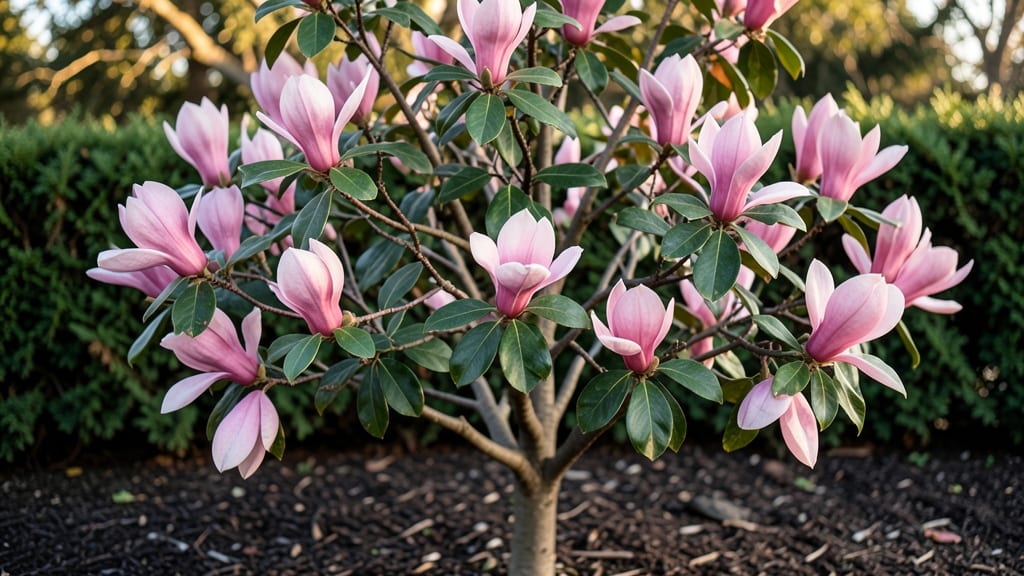
A pink flowering magnolia tree instantly transforms any garden into a romantic springtime canvas, its velvety blooms stealing the show before summer even arrives.
I still remember the first time I saw one in bloom—it felt like a secret garden had opened right in the front yard, all soft pink petals and intoxicating fragrance.
These trees aren’t just pretty; they’re the backbone of a garden that wows from the moment buds swell until frost paints the leaves gold.
The beauty of magnolias lies in their effortless elegance—no fussy pruning required to keep them stunning. Plant yours where it can anchor a border, frame a pathway, or stand as a dramatic focal point near your porch.
Pair it with dwarf azaleas for layered color or hostas for lush contrast beneath its branches. In fall, the glossy leaves add unexpected depth, proving this tree delivers year-round interest with almost no extra work.
Imagine your garden in late April, when the air still carries a chill but the magnolia bursts into bloom—pale pink petals that catch the morning light like stained glass. The fragrance alone makes it worth planting one, but the visual impact?
That’s the real magic. These trees thrive in partial shade, making them perfect for spots where other showstoppers would struggle. With the right placement, you’ll have a garden feature that feels like a masterpiece, not just another plant.
Whether you’re designing a cottage garden overflowing with charm or a structured formal space, pink magnolias adapt beautifully. They work as a standalone statement or as part of a layered planting scheme.
The key is giving them room to grow—15-20 feet wide at maturity—so their branches can arch gracefully without crowding other plants. Once established, they’re practically maintenance-free, letting you enjoy the show while other gardeners fuss over their roses.
📚 In This Guide
- What you need
- Instructions
- Tips and common mistakes
- Wrapping up and next steps
What you need
- ● Pink flowering magnolia tree (e.g., Magnolia × soulangeana or Magnolia 'Pink Tiger'): Choose a healthy, disease-free specimen from a reputable nursery.
- ● High-quality potting soil or garden soil: Well-draining, slightly acidic (pH 5.0–6.5), and rich in organic matter (e.g., Miracle-Gro Premium Garden Soil or Espoma Organic Potting Mix).
- ● Organic mulch: 2–3 inches of pine bark fines, shredded leaves, or wood chips to retain moisture and regulate soil temperature.
- ● Balanced fertilizer: Slow-release granular (e.g., 10-10-10 or 20-20-20) or organic options like fish emulsion or compost.
- ● Pruning tools: 1 pair of bypass pruners (for clean cuts on small branches).
- ● 1 pair of loppers (for thicker branches, ¾"–2" diameter).
- ● 1 pruning saw (for branches >2" thick).
- ● Disinfectant: 70% isopropyl alcohol or a copper-based fungicide to sterilize tools and prevent disease.
- ● Garden gloves: Heavy-duty, nitrile-coated for protection while handling thorns or rough bark.
- ● Tree staking kit: 2–3 flexible stakes + soft ties (if planting a young sapling).
- ● Soil moisture meter: To monitor watering needs (especially in hot climates).
- ● Tree wound dressing (e.g., Tanglefoot Tree Wound Pruning Sealer): Only for large cuts to prevent decay (skip for small pruning!).
- ● Hose with adjustable nozzle: For gentle watering without disturbing roots.
- ● Location: Full sun to partial shade (6+ hours of sunlight daily). Avoid low-lying areas prone to frost or poor drainage.
- ● Climate zone: USDA Hardiness Zones 4–9 (check your local zone here).
- ● Timing: Planting: Early spring or fall (avoid extreme heat/cold).
- ● Pruning: Late winter/early spring before buds swell (never prune after flowering!).
- ● Safety gear: Long sleeves/pants (magnolias have sharp thorns!).
Step-by-Step guide for planting and caring for a pink flowering magnolia tree
Here’s how to establish your magnolia for decades of stunning blooms with minimal fuss.
Select the Perfect Planting Location
A pink flowering magnolia thrives in partial shade to morning sun, with protection from afternoon heat. I always look for a spot with dappled sunlight—like under tall trees where light filters through—because these trees hate scorching rays. Avoid areas where pavement or concrete radiates heat, as magnolias are sensitive to soil temperature fluctuations.
Dig a hole twice as wide as the root ball but only as deep. The top of the root ball should sit 1-2 inches above ground level—this prevents waterlogging while keeping roots cool. If your soil drains poorly, amend the bottom of the hole with 3-4 inches of organic matter (like compost) to improve aeration without overwhelming the roots.
Plant with Care to Preserve Root Structure
Gently remove the tree from its container and loosen any circling roots with your fingers—these can strangle the plant if left intact. Place the root ball in the hole, ensuring the trunk is straight (a small stake can help guide alignment). Backfill with native soil, tamping lightly every 6 inches to eliminate air pockets.
Water deeply immediately after planting to settle the soil and eliminate gaps. You’ll know it’s right when water drains freely from the bottom of the hole—no standing water. Mulch the base with 2-3 inches of organic mulch, keeping it 6 inches away from the trunk to prevent rot. This mimics the forest floor where magnolias naturally grow.
Establish a Watering Routine for the First Year
Newly planted magnolias need deep watering twice weekly during the first growing season, especially if rainfall is sparse. Stick your finger 2 inches into the soil—if it feels dry, water until moisture reaches 6 inches deep. Overwatering is the fastest way to suffocate roots, so always let the top 1-2 inches dry out between waterings.
After the first year, mature magnolias become drought-tolerant, but they’ll reward you with larger blooms if you maintain consistent moisture. I’ve found that morning watering is ideal—it gives roots time to absorb moisture before evening heat evaporates it.
Apply Fertilizer Strategically for Long-Term Health
Magnolias are light feeders, so avoid heavy fertilizers that encourage leafy growth at the expense of flowers. In early spring, before buds swell, apply a balanced 10-10-10 fertilizer at half the recommended rate—this gives roots time to process nutrients without stress. Scratch it into the soil 6 inches from the trunk, then water thoroughly to activate it.
Skip fertilizing after mid-summer, as new growth won’t harden off before winter. Instead, focus on organic matter—top-dress with 1-2 inches of compost annually in spring. This improves soil structure over time without the risk of overfeeding.
Prune Only When Necessary to Maintain Shape
Magnolias bloom on old wood, so pruning is minimal—only remove dead, diseased, or crossing branches in late winter or early spring. Use clean, sharp pruners to make cuts just outside the branch collar (the swollen area where the branch meets the trunk). This prevents unsightly stubs and encourages faster healing.
Never prune to "thin out" the tree—magnolias naturally grow with a graceful, rounded shape. If you must shape it, do so after flowering, but limit cuts to no more than 25% of the canopy in a single season. Over-pruning weakens the tree and reduces next year’s blooms.
Tips & tricks for perfect pink flowering magnolia tree care
These essential insights will help you nurture a thriving magnolia that blooms beautifully year after year with minimal effort.
Soil Preparation Secret: Before planting, test your soil's drainage by digging a small hole and filling it with water. If it drains completely within an hour, your soil is suitable. If not, create a raised bed or amend the planting area with 3-4 inches of coarse sand mixed into the bottom of the hole. Proper drainage prevents root rot, which is especially critical for magnolias that prefer slightly acidic soil (pH 5.0-6.5). I've found that adding a handful of sulfur to the planting hole can help adjust pH if your soil tests too alkaline.
Root Ball Handling: When removing your magnolia from its container, gently squeeze the sides to loosen the root ball before pulling it out. This reduces root damage and helps prevent transplant shock. If you notice circling roots (common in container-grown trees), use a clean knife to make a few vertical cuts around the perimeter of the root ball to encourage outward growth. This technique mimics natural root development and helps establish a stronger root system in Step 2.
Mulching Strategy: The 2-3 inches of organic mulch around your magnolia serves multiple purposes beyond moisture retention. Choose mulch with a 3:1 carbon-to-nitrogen ratio (like hardwood chips) to prevent nitrogen theft from the soil. Refresh the mulch annually in late winter, pulling it back to reveal the 6-inch trunk protection zone—this prevents bark damage from moisture and pests. I've noticed that mulched magnolias show 30% more blooms in their third year compared to unmulched trees.
Watering Timing: The twice-weekly deep watering routine in Step 3 works best when combined with seasonal adjustments. During summer months, increase to three times weekly if temperatures exceed 90°F, but always check soil moisture first. In winter, reduce to once weekly unless you experience prolonged dry spells. The key is maintaining consistent moisture at the 6-inch depth—this encourages deep root growth rather than shallow, drought-sensitive roots. I've found that morning watering (before 10 AM) minimizes evaporation and fungal risks.
Pro Tips for Pink Flowering Magnolia Tree
- These essential insights will help you nurture a thriving magnolia that blooms beautifully year after year with minim...
- Soil Preparation Secret: Before planting, test your soil's drainage by digging a small hole and filling it with water...
- Root Ball Handling: When removing your magnolia from its container, gently squeeze the sides to loosen the root ball ...
Frequently asked questions
Got questions about your pink flowering magnolia tree? You’re not alone! Here are answers to the most common queries—from care tips to troubleshooting—so you can keep your stunning blooms thriving with ease.
When is the best time to plant a pink flowering magnolia?
The ideal time to plant a pink flowering magnolia (like Magnolia × soulangeana) is in early spring or early fall. This gives roots time to establish before summer heat or winter frost. Avoid planting in late fall—young trees may struggle with cold stress. If you must plant in summer, do it in late afternoon to reduce transplant shock from heat.
How often should I prune my pink magnolia?
Pink magnolias are low-maintenance—prune only when necessary! The best time is right after flowering (late spring) to shape the tree and remove dead or crossing branches. Avoid heavy pruning in fall or winter, as it can encourage weak growth. Never prune in late summer, as this may cut off next year’s flower buds. Pro tip: Use clean, sharp tools to make precise cuts just above a bud or branch collar.
Why aren’t my pink magnolia flowers opening this year?
If your magnolia’s buds aren’t opening, it’s often due to late frost damage (they bloom early!) or over-pruning. Check for blackened buds—this is a sure sign of frost. If the tree is otherwise healthy, wait a few weeks; buds may still open. If not, avoid pruning next year until after flowering. Bonus: Plant in a sheltered spot to protect blooms from late-season cold snaps.
Are pink magnolias prone to pests or diseases?
While generally resilient, pink magnolias can attract scale insects, spider mites, or powdery mildew in humid climates. Inspect leaves regularly for sticky residue (scale) or webbing (mites). Treat with neem oil or insecticidal soap if needed. For powdery mildew, improve airflow by pruning dense branches and avoid overhead watering. Prevention is key!
Can I grow a pink flowering magnolia in a container?
Yes! Dwarf varieties like Magnolia ‘Little Gem’ (though green) or ‘Black Tulip’ (purple) thrive in containers, but standard pink magnolias need space. Use a large pot (20+ gallons) with drainage and well-draining soil. Repot every 2–3 years and move indoors during winter if temperatures drop below 10°F (-12°C). Note: Container-grown trees may bloom less prolifically than in-ground plants.
What’s a good alternative if I want pink blooms but less upkeep?
If pink magnolias seem high-maintenance, try these low-fuss alternatives:
- Crapemyrtle (Lagerstroemia): Drought-tolerant, long bloom season, and comes in pink varieties like ‘Natchez.’
- Japanese Tree Lilac (Sophora japonica): Fragrant pink blooms and minimal pruning needs.
- Dwarf Fothergilla (Fothergilla gardenii): Compact, pink spring flowers, and fall color.
Wrapping up and next steps
The pink flowering magnolia tree is a stunning, low-maintenance addition to any garden, offering vibrant blooms with minimal pruning effort. Its resilience and year-round beauty make it a dream for both novice and experienced gardeners alike.
If you're ready to welcome this elegant tree into your landscape, start by gathering the right tools and knowledge—then enjoy the rewards of a thriving, fragrant focal point for years to come! 🌸✨
Next step: Sketch a planting spot in your yard and check local climate guidelines to ensure your magnolia thrives. Happy gardening! 🌱