Flowers
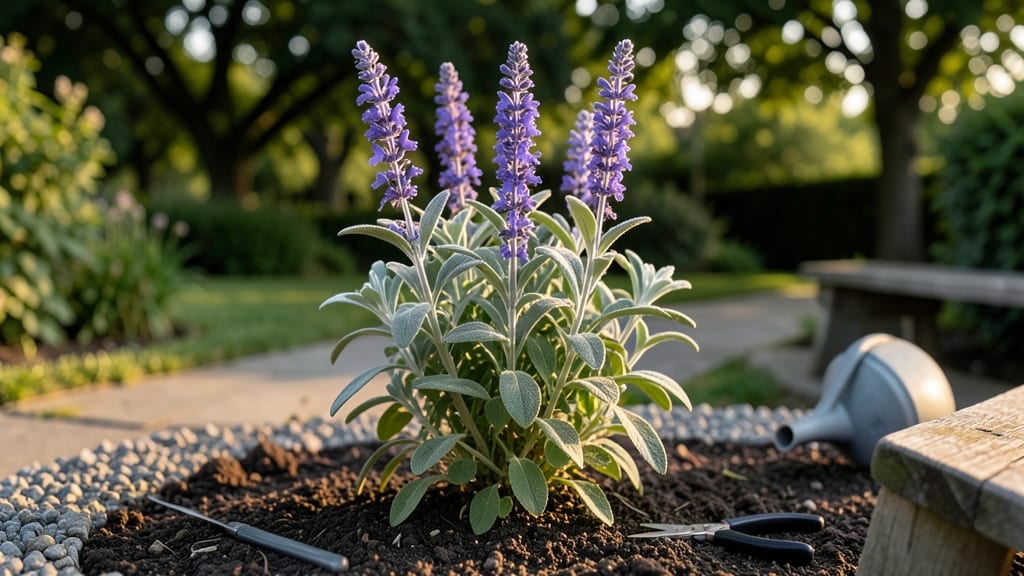
Growing culinary sage flowers means harvesting edible blooms with that signature licorice aroma—something I only discovered after accidentally letting a few stems flower last spring.
The key is treating your sage like the dual-purpose plant it is: prune leaves for cooking while letting some stems go to seed for those delicate purple-blue blossoms.
You’ll need full sun (at least 6 hours daily), well-draining soil, and patience—sage flowers take 2-3 years to reach their full edible potential. The trick is light pruning in early spring to encourage bushier growth, then letting 20-30% of stems flower naturally.
Too much pruning kills blooms, but too little means fewer leaves for your kitchen.
When those first flowers appear, you’ll get 3-4 weeks of harvestable blooms—great for garnishes, teas, or dried potpourri. The flavor is milder than the leaves but still packs that warm, herbal punch. Just harvest in the morning when petals are fully open for the best flavor and presentation.
Works in containers or garden beds, and thrives in USDA zones 5-9. If you live in hotter climates, provide afternoon shade to prevent leaf scorch while still letting those flowers bask in morning sun. The payoff? A plant that doubles as both kitchen staple and ornamental showstopper.
📚 In This Guide
- What you need
- Instructions
- Tips and common mistakes
- Wrapping up and next steps
What you need
- ● Sage plants (Salvia officinalis) – Start with healthy, established plants (potted or seedlings) or collect seeds from mature sage flowers.
- ● Well-draining soil – A mix of potting soil, perlite, and compost (ratio: 60% soil, 20% perlite, 20% compost).
- ● Containers or garden bed – Containers: 12–16 inch pots with drainage holes (1–2 plants per container).
- ● Garden bed: Full sun exposure (6+ hours/day) and loose, rocky soil (sage thrives in poor soil!).
- ● Organic fertilizer – Low-nitrogen, phosphorus-rich fertilizer (e.g., 5-10-10) or compost tea for blooms.
- ● Pruning shears – For trimming spent flowers and shaping plants.
- ● Watering can or hose with a gentle nozzle – Sage hates soggy roots!
- ○ Mulch (optional) – Gravel or straw to retain moisture and deter weeds.
- ○ Pest control (optional) – Neem oil or insecticidal soap for aphids/spider mites.
- ● Harvesting basket or scissors – For picking flowers (use clean, sharp tools!).
- ● Climate: USDA Zones 5–9 (sage is hardy but prefers mild winters).
- ● Patience: Flowers appear 1–2 years after planting from seed.
- ● Sunlight: No compromises! Partial shade = fewer blooms.
How to grow and harvest edible culinary sage flowers
Here's my method for cultivating fragrant, licorice-scented sage blooms that elevate both gardens and dishes.
Select and Prepare Sage Plants for Flowering
Choose established sage plants (Salvia officinalis) that are at least 18-24 inches tall with sturdy stems. I prefer mature plants because they've developed strong root systems that support the energy demands of flowering. Prune leggy growth back by one-third in early spring to encourage bushier, more productive stems.
Sage thrives in well-draining soil with a pH between 6.0 and 7.0. If your garden soil is heavy clay, amend it with compost and coarse sand to improve drainage. The key here is preventing soggy roots—sage flowers won't form if the plant struggles for air.
Provide Optimal Conditions for Blooming
Sage flowers require full sun exposure—at least 6-8 hours daily—to develop their signature licorice aroma. Position your plants where they'll receive morning sunlight and afternoon shade in hotter climates. I've found that afternoon shade prevents leaf scorch while still allowing enough light for flowering.
Water deeply once a week during dry spells, ensuring moisture reaches 6 inches deep. You'll know it's time to water when the top 2 inches of soil feel dry to the touch. Overwatering triggers fungal diseases that kill blooms before they open.
Encourage Flowering Through Strategic Pruning
When your sage plants reach 12-18 inches tall, pinch back the top set of leaves on each stem. This redirects energy from leaf growth to flower bud formation. I do this in early spring when new growth appears—just snip above a set of healthy leaves using clean, sharp pruners.
Remove any spent flowers as they fade to prevent the plant from wasting energy on seed production. This practice, called deadheading, keeps the plant focused on producing fresh, flavorful blooms. You'll notice new flower buds forming within 2-3 weeks of pruning.
Harvest Flowers at Peak Flavor and Fragrance
Harvest sage flowers in the morning after dew has dried when their licorice notes are strongest. Cut entire stems with 4-6 inches of stem attached—this prevents damaging the plant and makes it easier to dry. I always harvest just before full bloom when the buds are tightly closed but beginning to show color.
Gather flowers into small bunches and hang them upside down in a well-ventilated, dark space for 1-2 weeks. Once completely dry, store them in an airtight container away from light. Properly dried sage flowers retain their flavor for up to 1 year, making them perfect for garnishes, teas, or infused oils.
Maintain Plants for Continuous Harvests
After the first harvest, continue deadheading regularly to encourage secondary flushes of blooms. Feed plants with a balanced, organic fertilizer (10-10-10 ratio) every 4-6 weeks during the growing season. Sage is drought-tolerant once established, but consistent feeding keeps the plant vigorous for multiple harvests.
In colder climates, protect sage plants with mulch in winter to preserve roots. Even in mild winters, mulching helps maintain even soil moisture. With proper care, a single sage plant can provide edible flowers for 5-10 years, making it a worthwhile perennial addition to any culinary garden.
Tips & tricks for perfect culinary sage flowers
Growing edible sage flowers takes patience and precision—here's how to maximize your harvest with these essential tips.
Soil Preparation: Before planting, conduct a simple pH test on your garden soil. If it falls below 6.0, amend with crushed limestone to raise the pH gradually over 2-3 months. I've seen plants struggle in acidic soil despite other ideal conditions—this adjustment makes all the difference for robust flowering. The well-draining aspect can't be overstated: mix in perlite or vermiculite if your native soil compacts easily, especially in clay-heavy regions.
Light Optimization: While the instructions mention 6-8 hours of sun, I've found that positioning plants slightly east of full sun exposure actually enhances flavor intensity. The morning sun provides gentle warmth while protecting delicate buds from afternoon heat stress. In particularly hot climates, consider using shade cloth (30-50% coverage) during peak afternoon hours—this prevents leaf scorch while still allowing sufficient light for flowering.
Pruning Technique: When pinching back those top sets of leaves in Step 3, always use clean, sharp pruners and make cuts just above a set of healthy leaves. The key is to leave at least 3-4 leaf pairs below your cut—this ensures the plant maintains enough foliage for photosynthesis while redirecting energy to flower buds. I've ruined several harvests by cutting too close, which stunted new growth. For a more precise approach, mark your cutting line with a small piece of tape before making the snip.
Harvest Timing: The morning harvest window is crucial for preserving those delicate licorice notes. I've noticed the most intense flavor when harvesting just as the sun begins to warm the flowers but before dew fully evaporates. This timing captures the peak aromatic compounds. After harvesting, immediately strip the flowers from stems and spread them on a clean towel in a single layer—this prevents moisture buildup that can lead to mold during the drying process.
Pro Tips for Culinary Sage Flowers
- Growing edible sage flowers takes patience and precision—here's how to maximize your harvest with these essential tips.
- Soil Preparation: Before planting, conduct a simple pH test on your garden soil.
- Light Optimization: While the instructions mention 6-8 hours of sun, I've found that positioning plants slightly east of full sun exposure actually enhances flavor intensity.
Frequently asked questions
Got questions about growing and using culinary sage flowers? You’re not alone! Here are some of the most common queries—plus quick, practical answers to help you grow and enjoy these delicate, licorice-scented blooms with confidence.
Can I grow culinary sage flowers from store-bought sage plants?
Yes! Most common sage varieties (Salvia officinalis) produce edible flowers, but check for chemical treatments if buying from nurseries. Start with organic plants or grow from seed for the safest (and tastiest) blooms. If your plant is mature, simply snip stems with flower buds—no need to replant!
How long does it take for sage flowers to bloom?
With proper care, sage flowers typically bloom 6–12 weeks after planting seeds or pruning established plants. For faster results, choose established nursery plants (they may flower in 4–6 weeks). Patience pays off—early blooms are often the most flavorful!
Are sage flowers safe to eat raw, or should I cook them?
Both! Raw sage flowers add a mild, licorice-like crunch to salads or garnishes, while lightly cooking (sautéing, infusing oils, or drying) intensifies their earthy-sweet flavor. For first-timers, try them raw in vinaigrettes or dried in teas—they’re gentle on digestion but packed with antioxidants.
What if my sage flowers turn brown or wilt before opening?
Brown or wilted buds usually signal stress—check for these fixes:
- Watering issues: Sage hates soggy soil. Let the top inch dry between waterings.
- Heat/cold shock: Protect plants from sudden temperature swings (ideal range: 50–80°F).
- Pests: Inspect for aphids or spider mites (spray with neem oil if needed).
Can I substitute sage flowers for other herbs in recipes?
While unique, sage flowers can replace similar-flavored herbs in small doses:
- Thyme or oregano: Use ½ the amount in marinades or roasted dishes.
- Lavender: Pair with honey or fruit (sage is less floral—start with ¼ tsp).
- Rosemary: Try in infused oils or as a pine-like garnish.
Wrapping up and next steps
Growing culinary sage flowers is a rewarding way to elevate your garden—and your kitchen! 🌸 These delicate blooms bring a unique licorice-like flavor that’s perfect for garnishes, teas, or infused dishes. Whether you’re a seasoned gardener or just starting, their hardiness and versatility make them a must-try.
Ready to harvest your first edible blooms? Start small—plant a few seeds or propagate from cuttings—and experiment with their flavors in your favorite recipes. Happy growing, and may your garden (and palate) flourish! 🌱✨
Next step: Share your culinary sage flower journey with fellow gardeners or tag us in your culinary creations!